Silicone Mold Ownership Explained: Who Owns the Tooling and How to Protect Your Investment
Quick Navigation:
- What Mold Ownership Covers
- Common Ownership Models
- Contract Language
- Payment Milestones
- PO Checklist
- FAQ
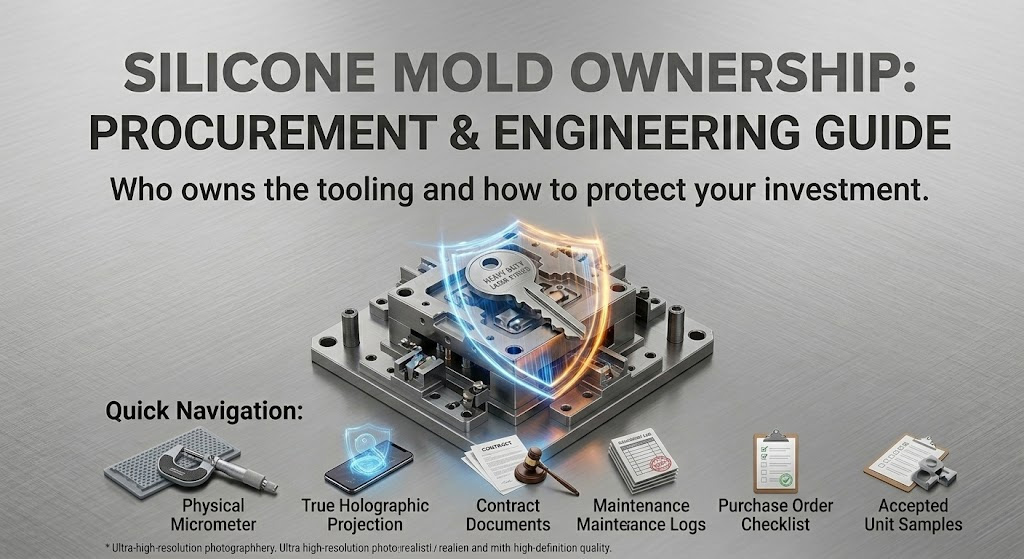
In OEM programs, silicone mold ownership is often the biggest legal and financial blind spot. Teams pay for tooling, launch production, and only later discover they cannot move the mold. That mistake is expensive. It delays supply shifts, locks pricing power, and creates avoidable dispute costs.
For procurement teams, tooling ownership is not only a legal topic. It affects lead time, second-source planning, and risk control. If terms are vague, your supplier may control access even when you funded the tool. Clear ownership rules should be defined before tooling release.
This guide explains tooling title (legal title) and transfer rights in practical language for buyers, engineers, and supply chain managers. It focuses on contracts, transfer rights, and execution checkpoints.
Clear tooling title terms should be reviewed in the same meeting as pricing and capacity.
What Mold Ownership Actually Covers
Silicone mold ownership should cover more than the physical mold block. It should also define who controls mold design files, CAD data, inserts, dedicated fixtures, and any backup mold built from your project data. If these assets are not listed, ownership can be partial even after full payment.
A common decision scenario is this: the buyer funds tooling, but the supplier keeps all design files and process settings private. The tool exists, but transfer is hard. You can move hardware, yet lose repeatability. That weakens your leverage during cost negotiations.
Risk point: many contracts say “tool belongs to customer” without defining related assets. Add a clear asset list. Include 2D drawings, 3D CAD, cavity maps, maintenance logs, validation reports, and approved process windows.
Ownership Scope Checklist
- Physical mold base, cavities, cores, inserts
- Mold drawings and latest CAD versions
- Tool-specific gauges, fixtures, and jigs
- Backup mold or duplicate cavity sets
- Validation records and approved process parameters
Common Ownership Models in OEM Programs
There is no single model. In practice, teams use three common structures. First, customer-funded and supplier-held: the buyer owns, supplier stores and runs the tool. Second, shared ownership: both parties share rights based on contribution. Third, amortized tooling: tooling cost is spread into piece price over a defined volume.
A realistic scenario: a startup wants low upfront capex, so it accepts amortized tooling. This can work for early demand. But if the contract does not define when title transfers, the supplier may retain control longer than expected.
When teams document title and transfer rules at project start, supplier transitions are faster and less disruptive.
Risk point: shared or amortized models fail when transfer triggers are unclear. Define exact title transfer events, such as “ownership transfers after final tooling payment” or “after 120,000 accepted units.”
Contract Language That Prevents Disputes
A strong contract needs explicit wording. Your tooling ownership clause should state title, possession, storage duty, maintenance standards, and return process. A complete mold ownership agreement should also define what happens to derivative tooling and updated revisions. In contract drafting, silicone mold ownership should be written as a defined term, not informal wording.
Milestone definitions should align with your overall silicone tooling cost planning to prevent financial exposure.
Risk point: broad wording like “subject to mutual discussion” is weak. Use enforceable language with timelines. Example: “Supplier shall release tooling within 15 business days after written notice and payment reconciliation of undisputed invoices.”
Minimum Clauses to Include
- Title transfer condition and effective date
- Storage location and access rights
- Maintenance frequency and record sharing
- Tooling ownership clause for derivatives and spare inserts
- Release timeline and logistics responsibility
- Jurisdiction and dispute resolution path
Payment Milestones and Acceptance Gates
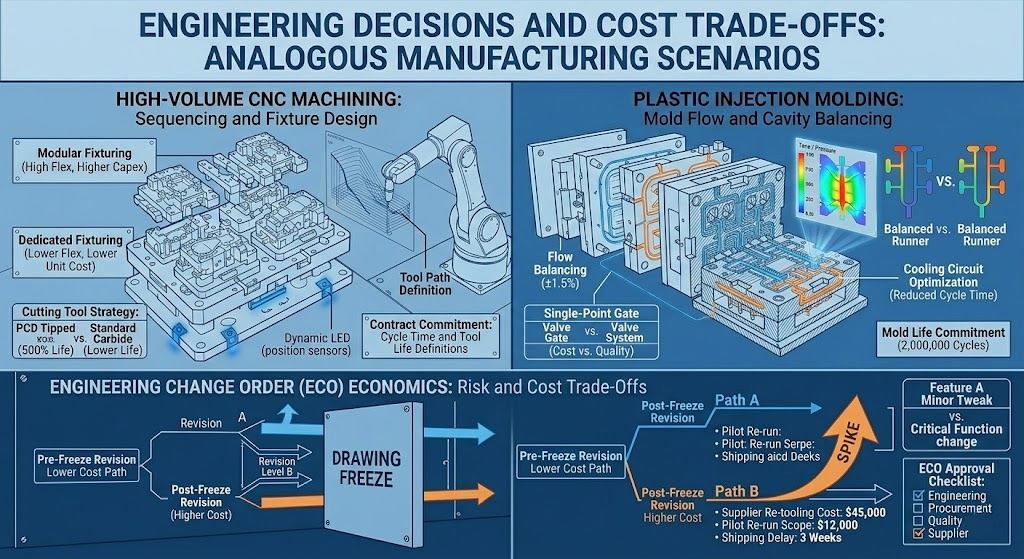
Tie payment to measurable gates. A common structure is 40/40/20 or 50/30/20. Use T0 for first sample feasibility, T1 for dimensional fit and correction, and T2 for pilot stability. When silicone mold ownership is linked to milestones, payment disputes drop.
These gates should also match validation during the silicone manufacturing process.
Suggested Milestone Framework
- T0 (40%): initial samples and feasibility review
- T1 (40%): corrected samples meet drawing requirements
- T2 (20%): pilot lot stability and documentation handover
PO-Ready Checklist Before You Sign
Use this checklist before issuing a tooling PO. It helps verify that silicone mold ownership is executable, not just stated.
- Ownership scope includes mold, CAD, fixtures, and records.
- Title transfer trigger is explicit and measurable.
- Storage site and access rights are written.
- Maintenance standard and reporting cadence are defined.
- Derivative tools and backup molds are covered.
- Release timeline and logistics duties are assigned.
- Exit refusal remedy is contractually defined.
- T0/T1/T2 acceptance criteria are measurable.
- Final payment is linked to acceptance completion.
- Legal jurisdiction and dispute forum are clear.
Before starting any custom silicone products project, ownership scope should be defined in writing.
Clear silicone mold ownership language makes transfer a defined process instead of a negotiation under pressure.
FAQ
If we pay for tooling, do we always own it?
Not always. Payment alone is not enough if title transfer terms are missing or conditional in the contract.
Can a supplier keep a backup mold without approval?
They should not, unless your agreement explicitly allows it. Derivative tooling rights must be written.
What is the best time to define transfer rights?
Before tooling release. Transfer terms added after disputes are harder to enforce.
Should process parameters be part of ownership handover?
Yes. Without validated process settings, transfer success rate drops and ramp-up time increases.
What is the biggest ownership mistake in procurement?
Using generic contracts that skip asset scope, transfer timeline, and milestone-linked payment control.
Action step: Before approving tooling PO, run one cross-functional review of ownership scope, transfer rights, and acceptance gates. This usually prevents the largest avoidable supply disruption in year one.