Cosmetic Brush Bag OEM Case: Market Test to Repeat Purchasing
For this e-commerce seller, the product had to work twice: first as a useful high-capacity organizer, then as a clear and convincing online listing. The sample, logo visuals, packaging, and production checks all had to support the same retail promise.
The buyer sold cosmetic tools and storage products through cross-border e-commerce channels. It needed a large bag that could organize makeup brushes for daily use and travel, but capacity alone was not enough. Shoppers also needed to understand the structure, finish, and private-label presentation from the online listing.
The sample therefore had to prove material quality and usability, while the product visuals and packaging had to communicate those advantages clearly online. Both sides needed to match: the listing had to represent the product accurately, and the finished product had to deliver what the listing promised.
What the buyer had to validate
More than a bag: six questions before committing to production
The buyer needed evidence that the product could store brushes effectively, present the brand clearly, fit the intended packaging, and be reproduced consistently at the target retail position.
Would the capacity be obvious online?
The structure needed to organize a large brush collection, and product-detail views had to make that capacity understandable without a physical demonstration.
Would it work for both storage and travel?
Size and structure had to support daily organization while remaining suitable for the buyer’s intended travel use.
Would the material match the retail position?
Material recommendations had to balance durability, appearance quality, and the price expectations of an e-commerce product.
Could the brand be approved before production?
Digital logo placement gave the buyer a concrete private-label view before committing to the final product.
Would the packaging support the listing?
The package needed to fit Amazon and other online retail channels and remain consistent with the visual positioning.
Could the approved sample be repeated?
Appearance, functionality, and packaging needed defined checks so batch production would stay aligned with the confirmed sample.
How the buyer reduced risk
The approved sample set the standard for the product and its listing
Sampling connected product performance, listing presentation, branding, and production control before the order moved into batch production.
Translate capacity into visible product information
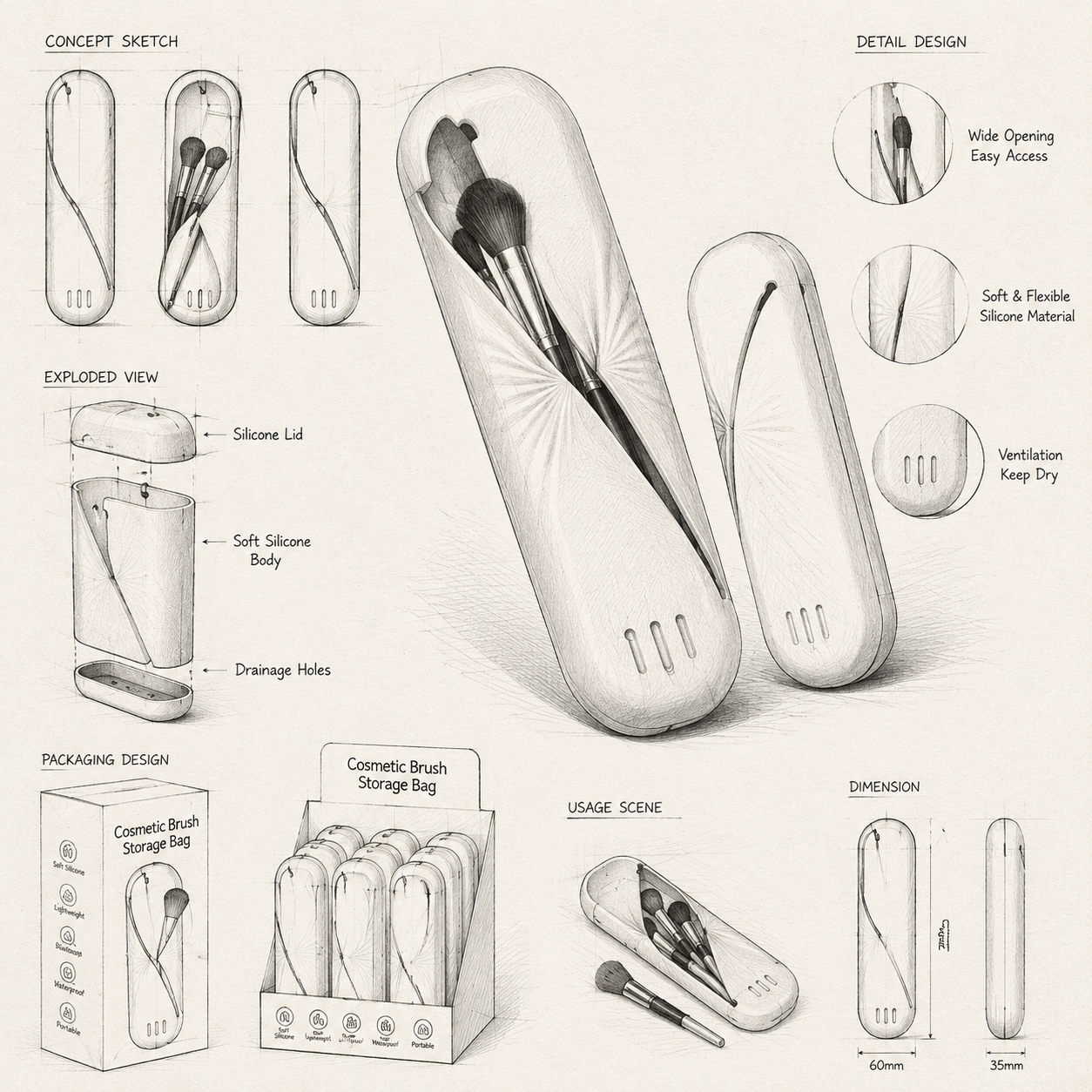
Product-detail images and structure visualization showed how the bag organized brushes, giving the buyer material for both evaluation and later listing use.
Refine size, structure, and material together
Recommendations considered storage capacity, cosmetic-tool use, durability, appearance, travel use, and retail positioning rather than optimizing one factor in isolation.
Confirm the private-label presentation early
The logo was digitally applied to product visuals so the buyer could review brand placement before mass production.
Use feedback to reach a final sample
The customer evaluated material quality and appearance, provided feedback, and confirmed the adjusted final sample before production began.
Carry the approved standard into the batch
Production included in-process inspection, appearance consistency checks, functional review, and packaging verification before shipment.
Project outcome
Final sample approval led to mass production and repeat supply
The project moved from sampling into batch production, and the product later became part of the customer’s repeat purchasing cycle. The approved design, packaging, and production checks supported a product the buyer could continue to source.
Before you request a quote
Questions that shape a market-ready beauty storage product
What information helps define the right bag structure?
Share the intended brush capacity, tool types, daily or travel use, preferred dimensions, reference images, retail position, and target packaging.
Can the logo be reviewed before a physical sample is completed?
Yes. This project used digitally applied logo visuals so the buyer could confirm the private-label direction early.
What should the buyer evaluate on the sample?
Material quality, appearance, storage capacity, structure, usability, logo presentation, and how well the product supports the planned online listing.
How is the final sample carried into mass production?
The project used in-production inspection, appearance consistency control, functional checks, and packaging verification before shipment.
Custom brush bag inquiry
Looking for a Custom Cosmetic Brush Storage Bag?
Share your target size, capacity, material requirements, logo, packaging, estimated quantity, and delivery schedule. Coolnice will review the details and provide quotation and sampling information.