How to use silicone baking mat products correctly comes down to a few basics: place the mat on a baking tray, do not grease it, preheat the oven, keep it away from direct contact with oven walls or exposed heating elements, and use it for the kinds of baking jobs it actually improves.
That sounds simple, but many first-time users still ask the same practical questions: Do you put the mat directly on the rack? Do you need parchment on top? Should you oil it? Is it better for cookies, pastry, or sticky dough? And why do some people love silicone mats while others think food browns differently on them?
This guide answers those questions directly, so readers can use a silicone baking mat with confidence instead of guessing their way through the first few trays. If you are comparing product specs from a silicone mat factory, usage clarity is one of the easiest ways to tell whether the product is ready for real customers.
Table of Contents
- Quick answer
- What a silicone baking mat is for
- How to use a silicone baking mat step by step
- Do you need to grease a silicone baking mat?
- What you should bake on it
- What not to do
- Why results can look different from parchment paper
- How to clean and store it after use
- What brands and buyers should explain to customers
- FAQ
Quick answer
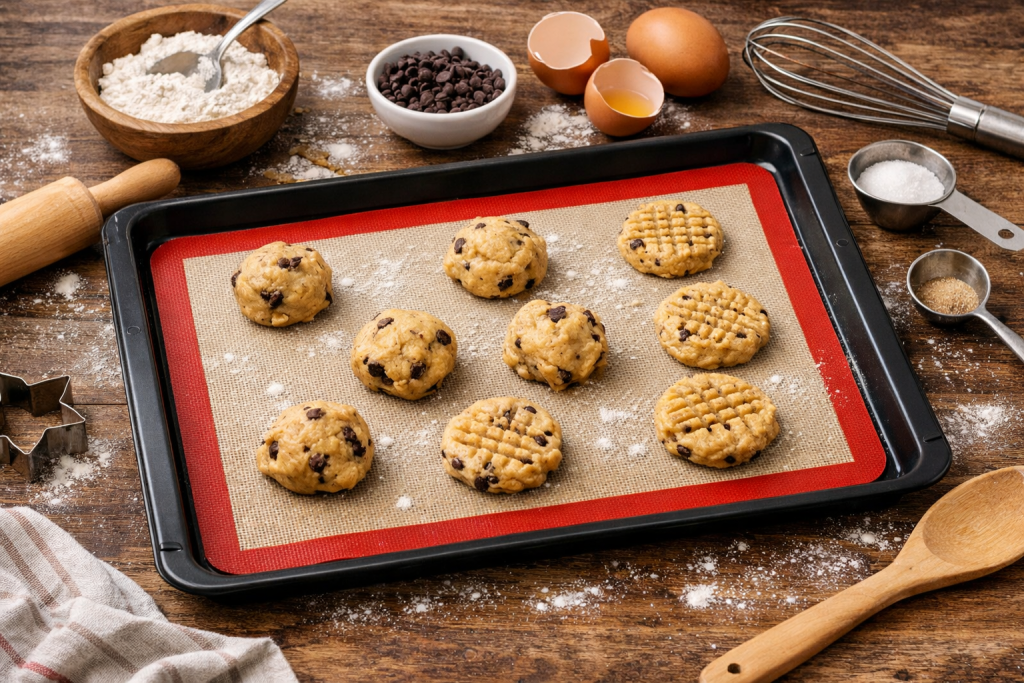
Preheat your oven, place the silicone baking mat on a baking tray, add your dough or food on top, and bake within the rated temperature range for that specific mat. Do not grease the mat unless the product instructions explicitly tell you to. Do not let the mat touch direct heat sources, oven walls, or open flame.
Official Maison Demarle / Silpat usage guidance also recommends placing the mat on a perforated baking tray, not greasing it, and making sure it is not touching the oven walls during baking.
What a silicone baking mat is for
A silicone baking mat is a reusable non-stick baking surface. It is mainly used to make baking cleaner, reduce sticking, and replace disposable parchment in many common oven tasks.
Good use cases include:
- cookies
- pastry dough
- macarons and piped batter
- sticky sugar work or delicate baked goods
- general tray prep for repeated baking
Readers looking for basic product background should also be routed to the broader article on whether silicone baking mats are safe, because correct use and safe use are closely tied together. If you also want to understand the material side of repeated food use, see how a food-contact silicone supplier approaches food-contact silicone production.
How to use a silicone baking mat step by step
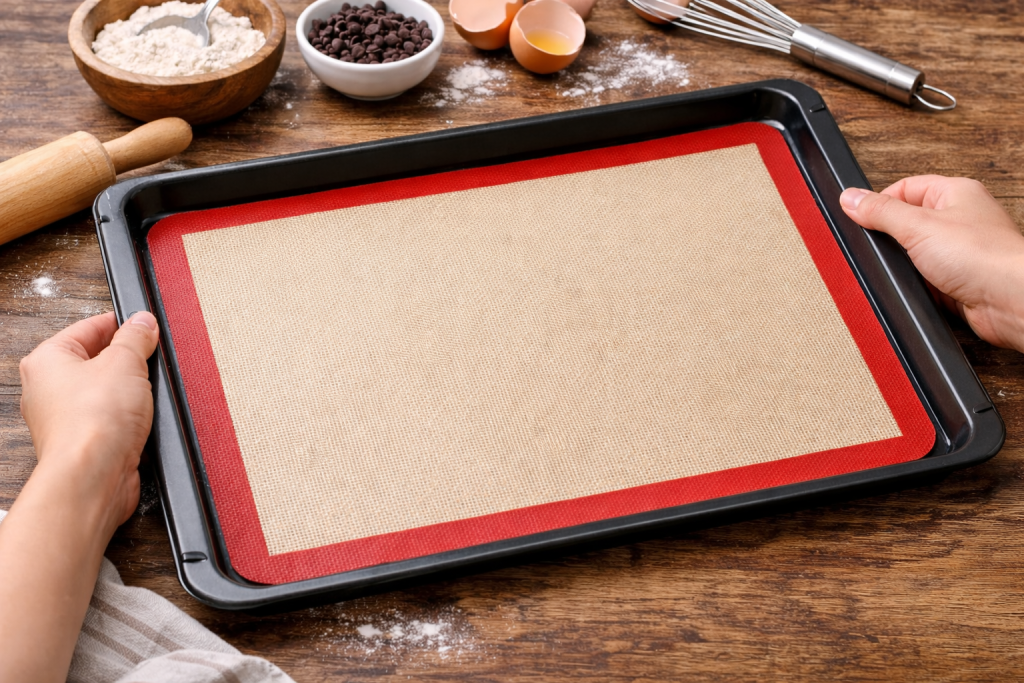
- Preheat the oven.
- Place the mat on a baking tray, ideally a perforated tray if that is what the brand recommends.
- Make sure the mat lies flat and is not folded or curled.
- Do not place the mat directly against the oven walls or exposed heating elements.
- Add your dough, batter, or prepared food on top of the mat.
- Bake within the rated temperature range of the specific product.
- Let the tray cool enough to handle before cleaning the mat.
That is the standard workflow. The biggest mistakes usually happen when users skip the tray, overcomplicate the setup, or treat the mat like a universal heat barrier instead of a baking surface.
Do you need to grease a silicone baking mat?
Usually no.
That is one of the main points of using a silicone baking mat in the first place. It is designed to provide a non-stick surface, so adding oil or spray often creates more problems than it solves. It can leave behind residue, make cleaning harder, and gradually create the greasy film users complain about later.
If your product instructions specifically say otherwise, follow that product-specific guidance. But for normal baking mat use, greasing is usually unnecessary.
What you should bake on it
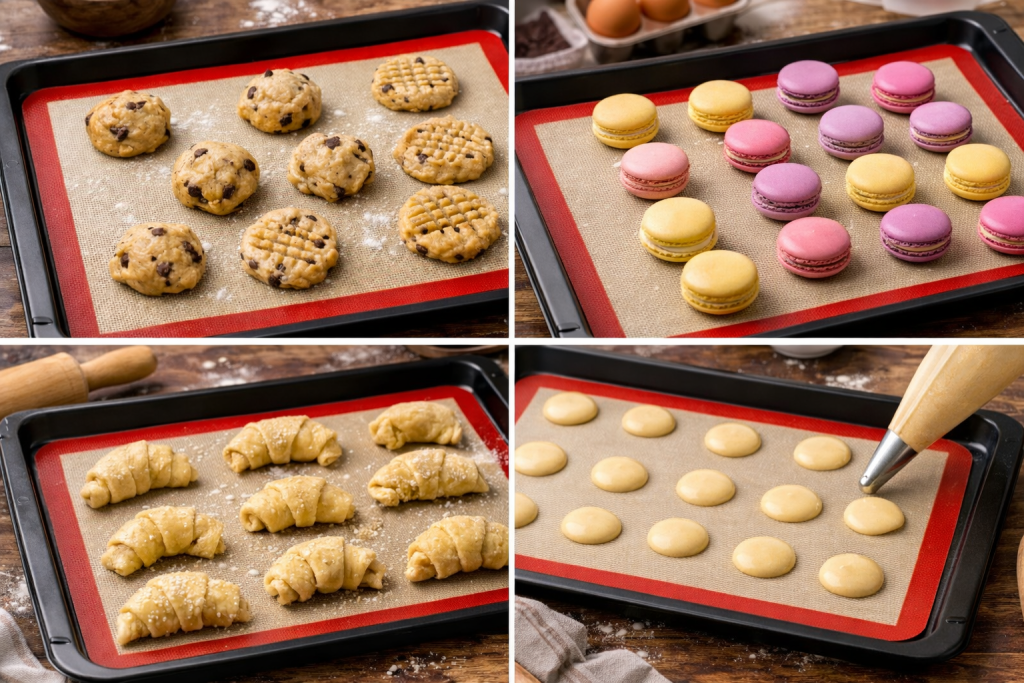
Silicone baking mats work especially well when sticking, spreading, or cleanup would otherwise be annoying.
Best uses include:
- cookies where you want easy release
- pastry work where dough handling matters
- macarons or piped shapes that benefit from a stable surface
- sticky batters or sugar-based baking tasks
- repeat-use tray setups for home bakers and small food businesses
They may be less ideal when a baker wants maximum underside browning or a very dry crisp finish. That does not make the mat bad. It just means results can differ slightly from parchment or a bare sheet, depending on the recipe.
What not to do
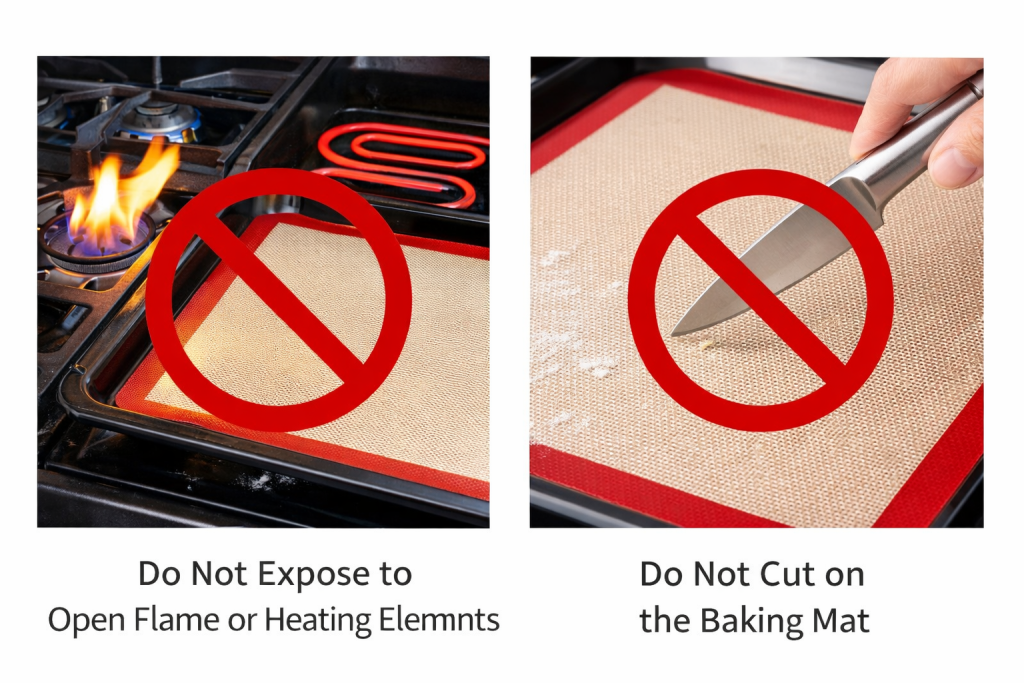
Most silicone mat problems come from misuse rather than normal baking.
- Do not use the mat on open flame, grills, or direct stovetop heat.
- Do not place it directly against exposed heating elements.
- Do not cut on it with knives or sharp tools.
- Do not use it beyond the rated temperature of the exact product.
- Do not fold it for storage.
- Do not assume every mat on the market performs to the same standard.
If users want the deeper risk explanation behind those limits, they should be routed to the companion article on whether silicone baking mats are toxic, because misuse, overheating, and product quality are often what drive that concern.
Why results can look different from parchment paper
One reason people ask how to use silicone baking mats is that they notice slightly different baking results compared with parchment.
That can happen because the baking surface behaves differently. Silicone mats often reduce sticking and improve consistency, but some recipes may brown differently on the bottom than they would on parchment paper.
That does not mean one surface is always better. It means bakers should match the tool to the result they want:
- use the silicone mat when easy release and repeatability matter most
- test parchment if you want a drier or more browned underside
- do side-by-side trials for recipes you make often
How to clean and store it after use
After baking, let the mat cool, then wash it with warm water, mild dish soap, and a soft non-abrasive sponge. Rinse thoroughly, shake off excess water, and let it air dry completely before storing it flat or loosely rolled.
If your users need the full care routine, send them to this companion guide on how to clean a silicone mat after baking. That article is better for oil film, soap residue, and storage problems.
What brands and buyers should explain to customers
If you sell baking mats under your own brand, usage instructions should be very clear. This is not just about customer convenience. It is also about reducing returns, misuse complaints, and poor reviews caused by bad first-use habits.
At minimum, users should be told to:
- preheat the oven before baking
- place the mat on a baking tray
- avoid greasing unless directed otherwise
- keep the mat away from oven walls and direct heat sources
- wash gently and store flat or loosely rolled
If you are sourcing silicone mats for resale or private label, a reliable custom silicone mat manufacturer should be able to align material specs, packaging inserts, and care instructions around the same product logic so first-use mistakes do not turn into preventable complaints.
A silicone baking mat is easy to use, but only when users are told the boring basics clearly: tray first, no grease, no direct heat, and proper cleaning after use.
FAQ
How do you use a silicone baking mat for the first time?
Clean it before first use, place it on a baking tray, preheat the oven, and bake within the rated temperature range. Do not grease it unless the product instructions specifically tell you to.
Do you need to grease a silicone baking mat?
Usually no. Greasing often creates extra residue and defeats one of the main benefits of a non-stick reusable baking surface.
Can you put a silicone baking mat directly on the oven rack?
It is better to place it on a baking tray. Official care guidance also recommends using a tray and making sure the mat does not touch the oven walls.
What foods are best on a silicone baking mat?
Cookies, pastry dough, macarons, piped batters, and sticky baking jobs are some of the best uses because the mat helps with release and cleanup.
Why do cookies sometimes bake differently on a silicone mat?
The baking surface behaves differently from parchment, so browning and texture can shift slightly depending on the recipe. Testing with your own formulas is the best way to learn which surface you prefer.
Related Silicone Mat Topics
- Are Silicone Mats Safe?
- How to Clean Silicone Mats
- Are Silicone Baking Mats Toxic?
- Are Silicone Mats Dishwasher Safe?
- Are Silicone Baking Mats Good for Cookies?
Sources
- Maison Demarle Advice: How should I use, clean, and store my molds and mats?
- Coolnice internal reference: Custom Silicone Mat Manufacturer
- Coolnice internal reference: Are Silicone Baking Mats Safe?