Are silicone baking mats dishwasher safe? Some brands say yes, but that does not automatically mean the dishwasher is the best way to care for them. In many cases, hand washing with warm water, mild soap, and a soft sponge is still the safer long-term habit, especially if your goal is to reduce residue, odor, and premature wear.
That is why this topic confuses people. A mat may survive the dishwasher, but repeated dishwasher cycles are not always the same thing as best-practice care. Heat, detergent strength, and repeated wash stress can all affect how the mat ages over time.
This guide explains what “dishwasher safe” usually means, when hand washing is still the better choice, and what brands should tell customers when they sell mats through retail, resale, or private label channels. If you are comparing after-sales durability across an OEM silicone mat supplier, this is one of the easiest real-world complaint patterns to watch.
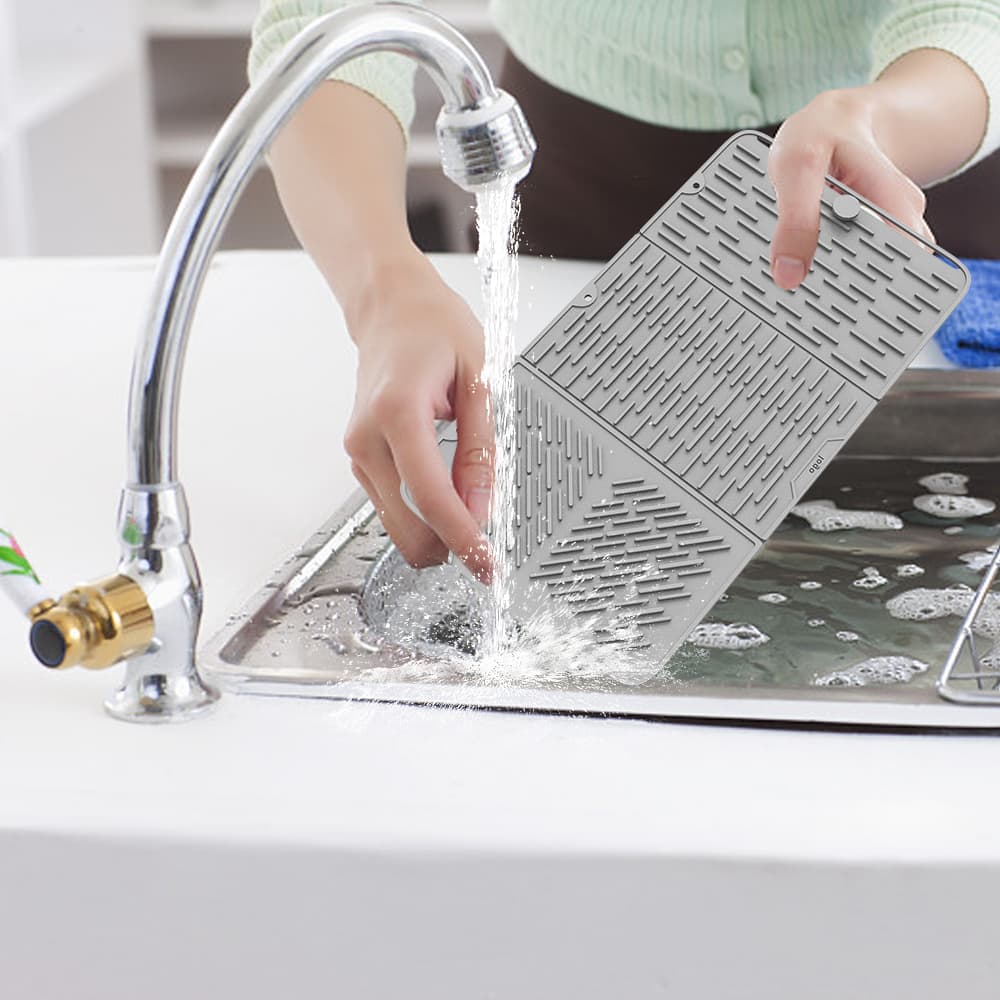
Table of Contents
- Quick answer
- What “dishwasher safe” actually means
- Why many brands still prefer hand washing
- What repeated dishwasher cycles can do
- When hand washing is the better choice
- What to check if your mat smells or feels sticky after washing
- What brands and importers should put in care instructions
- FAQ
Quick answer
Some silicone baking mats can go in the dishwasher, but hand washing is often the lower-risk care method. If the brand does not explicitly recommend dishwasher use, the safer default is warm water, mild dish soap, and a soft non-abrasive sponge.
Maison Demarle / Silpat care guidance says it is best to avoid the dishwasher and instead wash mats with water, dish soap, and a soft sponge. That makes hand washing the better baseline recommendation unless a specific product line clearly says otherwise.
What “dishwasher safe” actually means
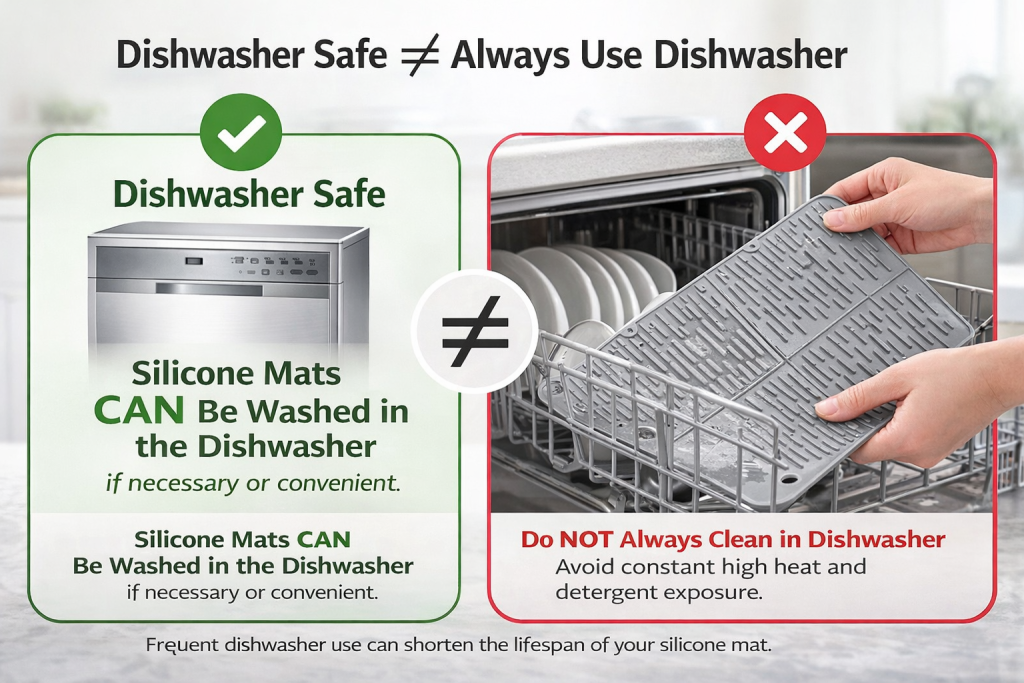
In real use, “dishwasher safe” usually means the mat can tolerate dishwasher cleaning under normal conditions without immediate failure. It does not necessarily mean dishwasher cleaning is the best way to preserve appearance, odor stability, or long-term performance.
That distinction matters because users often hear “dishwasher safe” as “always use the dishwasher.” Those are not the same thing.
If material stability is part of your decision process, it also helps to understand how an FDA silicone supplier controls curing and repeated-use performance before the product ever reaches packaging.
Why many brands still prefer hand washing
Many brands prefer hand washing for one simple reason: it gives the user more control.
- milder detergent exposure
- less repeated wash stress
- less risk of trapped odor from mixed dishwasher loads
- better visibility when checking grease film or residue
- lower chance of edge curling or long-term surface wear
If your goal is longest service life, hand washing is usually the safer recommendation even when the product is technically dishwasher tolerant.
What repeated dishwasher cycles can do
Repeated dishwasher cycles may contribute to:
- lingering odor if food residue is not fully removed
- surface feel changes over time
- faster wear compared with gentler hand washing
- detergent residue problems if the load does not rinse cleanly
That does not mean the dishwasher automatically ruins a silicone mat. It means repeated machine washing is not a neutral choice. Care method affects how the product ages.
If your bigger concern is what happens after the wash cycle, our article on how to clean silicone mats without grease or soap residue goes deeper into oil film, residue, and odor control.
When hand washing is the better choice
Choose hand washing when:
- the brand does not clearly say dishwasher safe
- the mat already holds odor easily
- you want gentler long-term care
- the mat has visible wear or edge damage
- you are trying to remove grease film or detergent residue
Users asking the broader “is this still okay to use?” question should also see our guide on how safe silicone mats are in regular kitchen use, because dishwasher care is only one part of the bigger product-life conversation.
What to check if your mat smells or feels sticky after washing
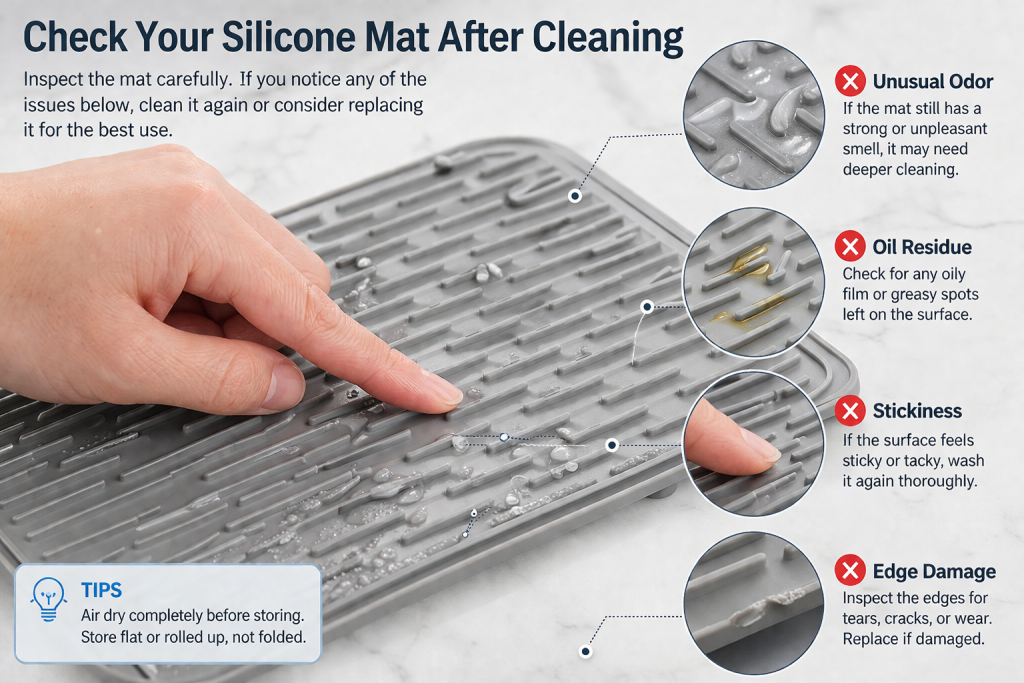
If a mat smells bad or feels sticky after dishwasher cleaning, do not jump straight to panic. Check these things first:
- Was there still grease on the mat before the wash cycle?
- Was the detergent too strong or poorly rinsed?
- Has the mat already started aging or breaking down?
- Has the mat also been exposed to overheating or misuse in the oven?
If odor, stickiness, or strange surface changes continue after proper hand washing, it may help to read our narrower explanation of why people worry about silicone mat toxicity, because persistent smell and material breakdown are often part of that concern.
What brands and importers should put in care instructions
If you sell reusable baking mats, your care card should not leave this topic vague. Tell users whether dishwasher use is merely tolerated or genuinely recommended. That difference affects expectations and review quality.
At minimum, care instructions should say:
- whether dishwasher use is allowed
- whether hand washing is preferred
- what soap and sponge type to use
- how to dry and store the mat
- what signs mean the mat should be replaced
If you are sourcing silicone mats for resale or private label, a dependable silicone mat manufacturer should help standardize those care instructions so users do not confuse acceptable use with best-practice care.
“Dishwasher safe” should never be the only care instruction. Buyers also need to know what protects the mat best over repeated use.
FAQ
Are silicone baking mats dishwasher safe?
Some are, but hand washing is often the safer default unless the brand clearly recommends dishwasher use.
Can silicone baking mats go in the dishwasher every time?
They may tolerate it, but repeated dishwasher cycles are not always the best way to preserve long-term performance. Many brands still prefer hand washing.
Why does my silicone mat smell after the dishwasher?
Odor can come from leftover grease, detergent residue, mixed dishwasher load smells, or aging material. Try proper hand washing and reassess the surface condition.
Is hand washing better than dishwasher cleaning for silicone mats?
Usually yes, if your goal is gentler care and lower risk of residue or odor problems over time.
When should I stop using a silicone mat after washing issues?
Replace it if strong odor, sticky surface changes, cracks, delamination, or visible damage continue after proper cleaning.
Related Silicone Mat Topics
- Are Silicone Mats Safe?
- How to Clean Silicone Mats
- Are Silicone Baking Mats Toxic?
- How to Use a Silicone Baking Mat
Sources
- Maison Demarle Advice: How should I use, clean, and store my molds and mats?
- Silpat Warranty PDF: exclusions related to cleaning, storage, overheating, and flame exposure
- Coolnice internal reference: Custom Silicone Mat Manufacturer