Are Silicone Baking Mats Safe for Food Contact? A Science-Based Guide

What Is a Silicone Baking Mat Made Of?
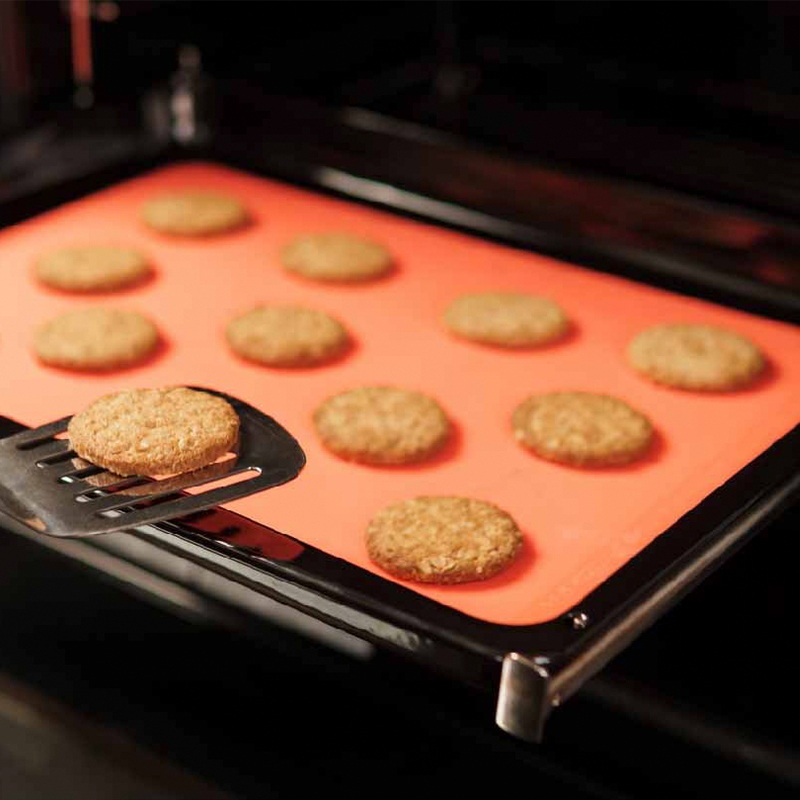
Most baking mats are made from silicone elastomer, often reinforced with a fiberglass mesh layer for shape stability. High-quality mats are designed to be flexible, non-stick, and reusable across many bake cycles.
From a safety perspective, material quality and processing matter more than appearance. Two mats can look nearly identical but behave differently if raw materials, curing process, or additives are not controlled well.
So, Are Silicone Baking Mats Safe?
In normal kitchen use, a reputable food-grade silicone mat is considered safe for food contact. Safety depends on three practical conditions:
- Material quality: food-contact appropriate silicone formulation.
- Manufacturing quality: proper curing/post-curing and stable process control.
- Correct usage: staying within specified temperature and care instructions.
If these conditions are met, silicone mats are widely used for baking cookies, pastries, bread, and roasted foods.
What Do “FDA” and “LFGB” Mean for Consumers?
You’ll often see product pages mention “FDA compliant” or “LFGB tested.” These terms can be useful, but they should not be treated as marketing slogans without context.
- FDA context (U.S.): usually refers to food-contact compliance framework relevance.
- LFGB context (EU/Germany market practice): often used as a stricter benchmark in kitchenware sourcing.
For practical consumer decisions, check whether the brand can provide clear testing information and product traceability—not just a badge image on packaging.
Safe Temperature Range: What Is Realistic?
Most quality silicone baking mats are commonly used in an approximate range of -40°C to 230°C (about -40°F to 446°F). Exact limits vary by product and design, so always follow the manufacturer’s specs.
Important: “heat-resistant” does not mean “indestructible.” Repeated overheating, direct flame contact, or broiler misuse can damage the surface and reduce safety confidence over time.
Do Silicone Mats Release Toxins?
This is the most common concern. Under intended use conditions, properly made food-grade silicone mats are generally considered safe. Risk increases when:
- product quality is poor or counterfeit,
- manufacturing is poorly controlled,
- the mat is overheated beyond spec,
- the mat is visibly degraded but still used.
In other words, the key is quality + correct use + timely replacement.
How to Choose a Safer Silicone Baking Mat
If you’re shopping online or in-store, use this quick checklist:
- Buy from brands/sellers with consistent reputation and clear product specs.
- Look for specific temperature range information, not vague “high heat” claims.
- Avoid products with strong chemical odor right out of the package.
- Prefer transparent brands that can explain material/testing background.
- Read long-term user feedback, not just first-day reviews.
How to Use Silicone Baking Mats Safely
Do
- Place the mat on a stable baking tray for even support.
- Use within the manufacturer’s temperature range.
- Wash with mild detergent and soft sponge.
- Dry completely before storage.
Don’t
- Do not place directly on open flame.
- Do not cut food on the mat with sharp knives.
- Do not use abrasive scrubbers that damage the surface.
- Do not keep using mats with cracks, peeling, or persistent odor.
When Should You Replace a Silicone Mat?
Even good mats wear out. Replace your mat if you notice:
- persistent strong smell after normal washing,
- sticky or powdery surface changes,
- cracks, tears, edge breakdown,
- obvious warping that affects baking performance.
For frequent bakers, periodic replacement is part of normal kitchen safety hygiene.
Common Myths (Quick Fact Check)
Myth 1: “All silicone is automatically food-safe.”
Fact: quality and process control matter. “Silicone” alone is not a complete safety guarantee.
Myth 2: “No smell means always safe.”
Fact: low odor is a good sign, but not a standalone compliance proof.
Myth 3: “If it survives high heat once, it’s fine forever.”
Fact: long-term durability depends on repeated-use conditions and care habits.
FAQ
Are silicone baking mats safe for food contact?
Yes, when made with food-grade silicone, properly manufactured, and used within recommended limits, they are generally safe for food contact applications.
Can I use silicone mats every day?
Yes. Daily use is common, as long as you clean properly and replace the mat when wear signs appear.
Are silicone mats better than parchment paper?
They serve similar purposes. Silicone mats are reusable and cost-efficient over time; parchment is disposable and convenient for quick cleanup.
Can silicone mats go under a broiler?
Usually not recommended unless the product explicitly states broiler compatibility. Broiler heat can exceed normal baking safety limits.
Final Verdict
Silicone baking mats are generally safe for food contact—but safety is not just about a label. It comes from trustworthy material quality, controlled manufacturing, and proper user behavior.
If you choose reputable products, follow temperature guidance, and replace worn mats in time, silicone baking mats are a practical and safe tool for everyday baking.