Is Silicone Bakeware Safe in the Oven and Microwave? Complete FDA/LFGB Temperature Guide
Short answer: yes. High-quality food-grade silicone bakeware is generally safe for oven, microwave, and freezer use when used inside the product’s temperature rating and purchased from compliant manufacturers. The confusion usually comes from low-grade materials, unknown fillers, and misuse (especially direct flame or broiler contact).
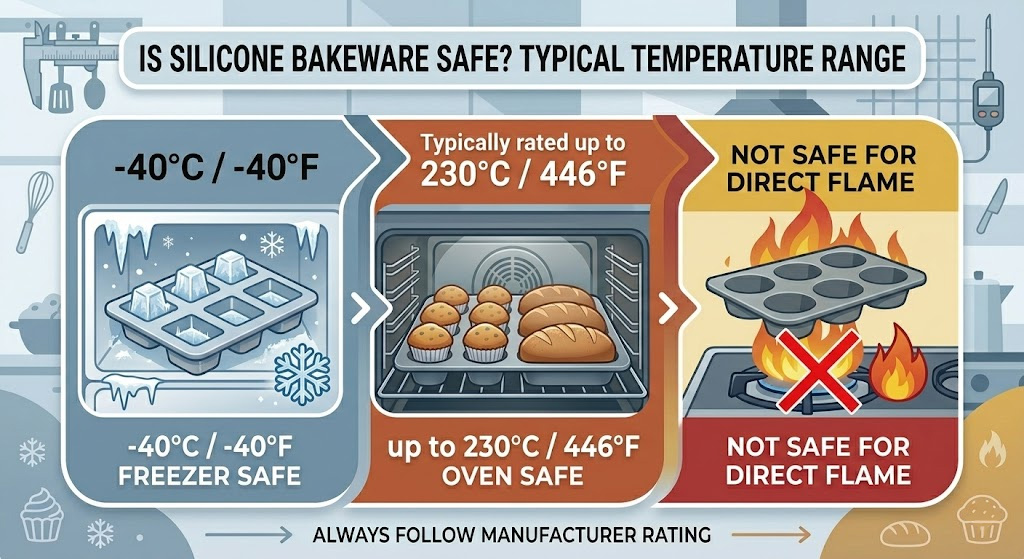
Quick Answer Box
- Typical safe range: -40°C to 230°C (-40°F to 446°F)
- Microwave-safe: Yes, for certified food-grade silicone
- Freezer-safe: Yes
- Dishwasher-safe: Usually yes (top rack preferred)
- Not safe for: direct flame, stovetop contact, prolonged broiler exposure
What Is Food-Grade Silicone?
Food-grade silicone is a polymer primarily derived from silica, processed into a stable elastomer for food-contact applications. In kitchenware, silicone is valued because it is flexible, non-stick, resistant to moisture, and stable across a broad temperature range. Unlike many plastics, quality silicone does not rely on BPA or phthalates to perform in heat-intensive applications.
FDA and LFGB: What Buyers Should Know
When manufacturers claim food-grade safety, the most common references are FDA food-contact compliance and LFGB testing. These standards evaluate migration and safety under expected conditions. In global sourcing, LFGB is often treated as the stricter benchmark for premium retail markets, while FDA compliance is widely used in the U.S. market.
For B2B buyers, a label alone is not enough. Request test reports from accredited labs, confirm the tested material matches the actual production lot, and verify that pigments/additives are included in the compliance scope.
How Hot Can Silicone Bakeware Get?
The most searched question is: Will silicone melt in the oven? Under normal baking conditions, quality silicone does not melt. Most products are rated to about 230°C (446°F) for continuous baking. Some formulations may tolerate higher temperatures briefly, but this should not replace the manufacturer’s official limit.
Silicone Baking Mat Max Temperature
Most silicone mats are designed around the same -40°C to 230°C range. That makes them useful for baking, freezing dough, and reheating. However, repeated operation near upper limits can accelerate wear, especially in low-cost products with fillers.
Why Broilers and Open Flames Cause Damage
Broiler elements and direct gas flames can create localized temperatures that exceed silicone’s safe operating window. Even if average oven temperature is acceptable, direct radiant exposure can scorch or degrade the material. This is why safe-use guidance always says: avoid open flame and avoid direct contact with heating elements.
Is Silicone Safe in Microwave, Oven, and Freezer?
Oven Use
Yes. Silicone molds and trays are oven-safe within their rating. Because silicone is flexible, place molds on a rigid metal tray before filling and moving to avoid spills and improve heat consistency.
Microwave Use
Yes. Certified silicone is microwave-safe and generally stable during normal heating. It also does not spark like metal. For best results, avoid overheating oily foods and allow steam to vent from covered containers.
Freezer-to-Oven Workflows
One major advantage is thermal flexibility. Silicone handles cold storage well and is less prone to cracking than glass during temperature transitions. Even so, always follow product guidance and avoid extreme thermal shock outside the rated range.
Common Safety Concerns (And Practical Answers)
Does Silicone Leach Chemicals into Food?
Certified high-quality silicone is designed to resist harmful migration at intended temperatures. Off-odors, sticky surfaces, and fast discoloration are more common in low-grade products with excess fillers.
Is Silicone Toxic When Heated?
Food-grade silicone is considered non-toxic under normal cooking conditions and does not behave like low-grade plastics. The key risk factor is not “silicone” itself, but unknown material quality and misuse beyond rated temperature.
Are Colored Silicone Molds Safe?
They can be safe when pigments are food-contact compliant and properly dispersed in the base material. Reliable suppliers can provide documentation covering base silicone and color systems.
How to Spot Low-Quality Silicone
- Strong chemical odor after first wash
- Surface becomes sticky after repeated heating
- Abnormal whitening/tearing under light stress
- No verifiable compliance documents
Silicone vs Metal vs Glass vs Parchment
Each material has strengths. Good kitchens often use them together based on recipe goals:
- Silicone: best for release, flexibility, and reusable liners.
- Metal: strongest browning and crisping performance.
- Glass: stable and inert but heavier and breakable.
- Parchment: convenient and disposable; higher recurring waste.
If the goal is non-stick performance with lower disposable waste, silicone mats are usually the practical middle ground.
Safe Use Checklist
- Buy from suppliers with valid FDA/LFGB documentation.
- Pre-wash before first use to remove production residues.
- Respect maximum temperature printed on packaging/spec sheet.
- Do not place directly on flame, burner, or broiler coil.
- Support flexible molds on metal trays during transfer.
- Do not cut directly inside silicone molds with sharp tools.
- Inspect periodically; replace damaged or sticky items.
How to Evaluate Supplier Quality
For Google-quality content and real-world trust, product pages should show demonstrable experience and evidence. If your audience includes procurement teams or brand owners, include:
- Experience: manufacturing years, categories served, production scale.
- Expertise: material specifications, process controls, temperature testing methods.
- Authoritativeness: third-party lab reports, certifications, export markets.
- Trustworthiness: transparent claims, realistic limits, clear warranty/after-sales terms.
Pages that provide real verification signals (documents, methods, quality controls) usually perform better than pages that only repeat generic marketing statements.
FAQ: High-Intent Queries Users Actually Search
Q1: Is silicone bakeware safe for all ovens?
Yes, when used within the product’s rated temperature (commonly up to 230°C / 446°F).
Q2: Can I put silicone in the microwave?
Yes, certified food-grade silicone is microwave-safe for normal cooking/reheating.
Q3: Does silicone release toxins when heated?
Compliant food-grade silicone does not typically release harmful substances at normal baking temperatures.
Q4: Why does my silicone smell?
Odor may indicate low-grade material, residual processing compounds, or overheating beyond limits.
Q5: How long does silicone bakeware last?
With proper use and cleaning, high-quality silicone can remain functional for years.
Buyer Checklist for OEM/ODM Silicone Bakeware Projects
If your goal is not only SEO traffic but also lead quality, add a procurement-focused section like this. It helps buyers quickly qualify whether a factory can support compliant, repeatable production:
- Material transparency: Request base polymer information, additive list, and declared hardness range (for example Shore A values).
- Process controls: Ask how curing parameters are controlled and recorded from batch to batch.
- Migration testing scope: Confirm testing includes colorants and any surface treatments, not just uncolored base silicone.
- Heat-aging validation: Ask for internal data showing product performance after repeated heating cycles.
- Mechanical durability: Review tear strength and deformation resistance relevant to your product category (molds, mats, gloves, utensils).
- Packaging and labeling: Ensure user instructions clearly state temperature limits and prohibited use cases.
- Traceability: Make sure each lot can be linked to raw materials, test reports, and shipment records.
Practical Troubleshooting in Real Kitchens
Issue 1: Food browns less on silicone.
This is normal for many recipes because silicone transfers heat differently than dark metal pans. For stronger browning, increase bake time slightly or finish briefly on metal if recipe permits.
Issue 2: Mold feels too soft when moving batter.
Put the mold on a rigid baking sheet before filling. This improves stability, reduces spills, and helps achieve more even results.
Issue 3: White marks after pinching.
Minor stress whitening can happen in some formulations, but heavy whitening combined with odor or sticky residue can indicate fillers or aging. Monitor performance and replace if quality drops.
Issue 4: Lingering odor after first use.
Wash with warm water and mild detergent, then run a short low-temperature bake cycle to ventilate. Persistent strong odor may indicate low material quality.
Issue 5: Concern about long-term safety.
Use products from suppliers that can provide recent test reports and stable production records. Replace damaged tools promptly and avoid temperature abuse.
Search Intent Coverage: Why This Page Can Rank Better
This page is designed to match high-intent queries users actually type, including: “is silicone bakeware safe,” “can silicone go in microwave,” “silicone oven temperature limit,” and “FDA LFGB silicone difference.” Structuring content around these questions improves relevance, while practical details (temperature ranges, misuse warnings, buyer checklist) improve usefulness and trust.
For stronger performance, keep this page updated with fresh dates, revise FAQs based on customer questions, and add internal links from related product pages (molds, mats, gloves, spatulas). Search engines reward content that remains accurate, specific, and clearly maintained over time.
References
Conclusion
Is silicone bakeware safe? Yes—if it is truly food-grade, properly certified, and used within rated temperatures. For B2B sourcing, safety depends as much on supplier transparency and quality control as on the base material itself.
At Coolnice, we support OEM/ODM projects with documented material compliance, heat-resistance verification, and custom silicone product development for global brands.