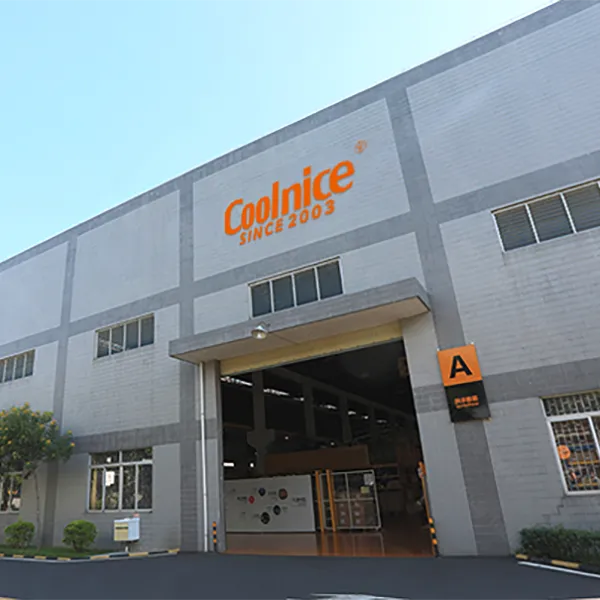
Silicone Baking Mat Manufacturers: Complete OEM Sourcing Guide for Importers
If you are sourcing from silicone baking mat manufacturers, choosing the right supplier is about more than price.
You need stable material quality, food-contact compliance, dimensional consistency, reliable lead times, and practical OEM/ODM support.
In this guide, we explain how buyers evaluate a qualified
silicone mat manufacturer,
what to ask before placing bulk orders, and how to build a low-risk supplier shortlist.
In real sourcing projects, many buyers discover that two silicone baking mats that look identical can perform very differently in odor, durability, and non-stick stability.
This difference usually comes from silicone formulation, curing process, and quality control standards used by the manufacturer.
Why Buyers Source from Silicone Baking Mat Manufacturers in China
Many importers evaluate top silicone baking mat manufacturers in China because of mature supply chains, flexible customization, and scalable production.
However, supplier capability can vary significantly, especially in compliance documentation and batch consistency.
- Established silicone tooling ecosystem
- Flexible OEM/private-label packaging support
- Competitive costs for medium and high-volume orders
- Faster sampling and design iteration
- Export experience with international buyers
How to Compare Silicone Baking Mat Manufacturers
1) Material Quality and Food Safety
- Request food-contact compliance documentation (market-specific, such as FDA/LFGB frameworks).
- Verify third-party migration/safety reports and test date validity.
- Confirm silicone formulation stability (odor control, filler ratio, curing consistency).
2) Heat Resistance and Product Performance
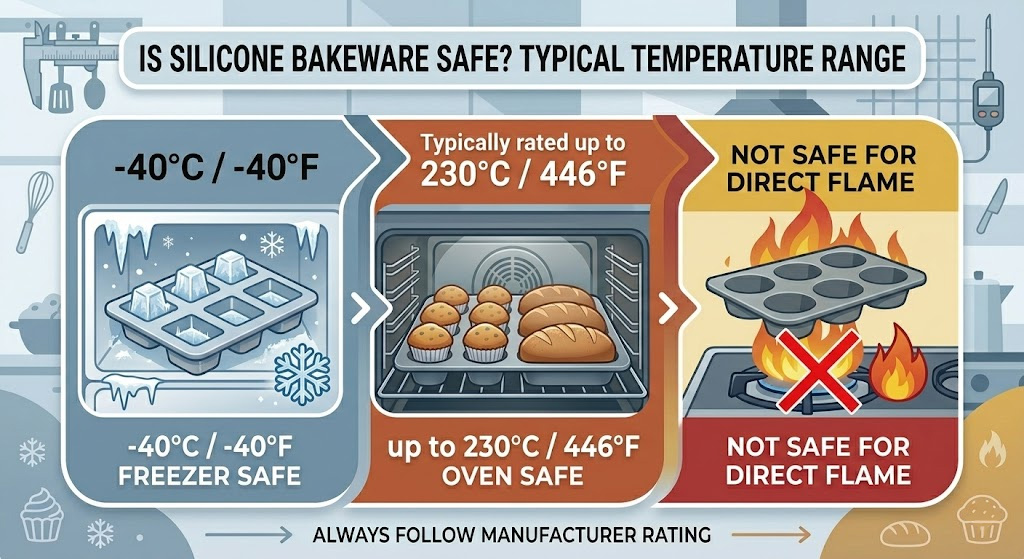
Most food-grade silicone baking mats are designed to operate between approximately
-40°C and 230°C (-40°F to 446°F), although exact ratings depend on formulation and reinforcement materials.
- Check long-cycle heat aging performance, not only initial sample results.
- Test non-stick behavior after repeated baking and cleaning cycles.
- Validate edge stability and warping resistance under practical oven conditions.
3) Dimensional and Print Consistency
- Control thickness tolerance and flatness consistency across batches.
- Check logo/measurement print adhesion and fade resistance.
- Confirm color stability and repeatability for branded SKUs.
4) OEM/ODM Capability
- Mold/tooling development support
- Custom size, color, print, and packaging
- Barcode, label, and retail packing workflow support
5) Quality Control and Delivery Reliability
- Incoming material checks + in-process QC + final AQL inspection
- Traceable lot records for claims and after-sales handling
- Clear lead-time commitment for peak-season production
Real Factory Evaluation Example
In a recent OEM sourcing project for a European kitchenware brand, three silicone baking mat manufacturers were evaluated.
All suppliers offered similar pricing, but sample testing revealed major differences in odor level and print durability.
The final supplier was selected based on consistent thickness tolerance, better curing control, and stable batch performance across two pilot orders.
This reduced complaint risk after launch and improved replenishment consistency in later production runs.
Typical Procurement Process for Silicone Baking Mats
- Define product specifications (size, thickness, print, packaging, compliance target)
- Request quotations from shortlisted silicone baking mat manufacturers
- Evaluate samples, test reports, and communication responsiveness
- Confirm packaging, carton marks, and labeling standards
- Run a pilot order with clear QC checkpoints
- Scale production after stable repeat performance
Common Red Flags During Supplier Selection
- Outdated or unclear test reports
- No explanation of formulation or curing process control
- Unrealistic lead-time promises with no capacity evidence
- Resistance to third-party pre-shipment inspection
- Frequent commercial term changes after sampling
External Standards Reference
Food-contact silicone products should comply with regulations such as FDA 21 CFR 177.2600 in the United States
or LFGB standards in Europe.
More information about food contact compliance can be found through official regulatory resources.
Internal Resources
Frequently Asked Questions
Are silicone baking mats safe for food contact?
When manufactured with food-grade silicone and compliant with regional standards such as FDA or LFGB,
silicone baking mats are generally safe for food contact applications.
How long do silicone baking mats typically last?
Under normal household baking conditions, high-quality silicone mats can withstand hundreds or even thousands
of baking cycles without significant performance loss.
What thickness is typical for silicone baking mats?
Common thickness ranges between 0.6 mm and 1.2 mm, depending on durability target and reinforcement design.
How should buyers evaluate silicone baking mat manufacturers efficiently?
Use a scorecard that combines compliance, sample performance, process control, communication quality, and on-time delivery history
before scaling to annual volume.
Detailed Supplier Scorecard for Importers
A practical way to compare silicone baking mat manufacturers is to use a weighted scorecard instead of relying on quotation spreadsheets alone.
Buyers often find that a supplier with a slightly higher unit price delivers lower total cost because claims are fewer, replenishment is smoother,
and rework risk is lower. Assign a score from 1 to 5 for each category and weight categories based on your business model.
For example, if your brand sells premium kitchenware, compliance and finish quality should carry higher weight than headline price.
If your model is high-volume retail promotions, lead-time reliability and packaging execution may deserve higher weight.
The key is consistency: use the same framework across all shortlisted suppliers and keep written evidence for each score.
- Compliance documentation quality and update frequency
- Sample performance across odor, non-stick behavior, and durability
- Production control capability (incoming, in-process, final inspection)
- Communication responsiveness and issue-resolution clarity
- Commercial terms stability and transparency
- On-time delivery history and peak-season contingency planning
MOQ, Pricing Structure, and Cost Transparency
During negotiations with silicone baking mat manufacturers, ask for a clear price structure that separates material cost,
printing cost, packaging, and shipping terms. Without this breakdown, it is difficult to compare quotations fairly.
Some suppliers may offer attractive opening prices but recover margin through rigid MOQ thresholds or packaging upcharges.
Clarify whether pricing is based on silicone grade, fiberglass reinforcement type, thickness tolerance, print method,
and final packaging complexity. Small changes in thickness or print area can materially affect production yield.
When possible, request multi-tier pricing scenarios for 3,000 / 10,000 / 30,000 units to model scale effects.
It is also useful to discuss mold amortization and artwork setup separately. For long-term programs,
negotiate terms that reduce redesign costs for seasonal refreshes. A transparent commercial structure improves planning accuracy
and reduces disputes when reorders scale quickly.
Sampling Protocol: What to Test Before Bulk Orders
A robust sampling protocol is one of the best defenses against post-launch complaints.
Instead of approving based on appearance only, run practical tests that mimic user behavior.
Evaluate at least two to three sample rounds when launching new dimensions, colors, or printed measurement guides.
- Odor check after opening and after heat cycles
- Non-stick performance across sugar, oil-rich, and dough-based recipes
- Cleaning efficiency after repeated use with mild detergent
- Print abrasion resistance after scrubbing and heat exposure
- Edge curling or warping tendency on different baking tray types
- Thickness consistency at multiple points on the same mat
Record observations with photos, cycle counts, and operator notes. Ask suppliers to confirm corrective actions in writing
for any failed metric. This creates a stronger technical baseline before issuing purchase orders.
Quality Agreement and Pre-Shipment Controls
After supplier selection, convert technical expectations into a written quality agreement.
Many importers skip this step and rely on proforma invoices, which usually do not specify measurable quality thresholds.
A clear agreement should define raw-material standards, tolerances, defect classification, AQL level,
packaging requirements, and claim-handling timelines.
For pre-shipment controls, define sampling methods and pass/fail criteria before production starts.
Include carton drop checks, barcode readability checks, and random lot traceability verification.
If your market has strict food-contact controls, align testing cadence with actual shipment frequency,
not just annual qualification tests.
Logistics, Incoterms, and Replenishment Planning
Choosing the right incoterm is as important as selecting the right supplier.
Discuss EXW, FOB, and DDP options based on your internal logistics capability and destination market requirements.
For first-time projects, many buyers prefer FOB to retain freight flexibility while keeping factory-side responsibilities clear.
Build a replenishment model that includes production lead time, booking buffer, customs clearance uncertainty,
and peak-season demand spikes. Strong silicone baking mat manufacturers will provide realistic capacity windows
and suggest order phasing to reduce stockout risk.
If your SKUs include multiple colors and prints, plan mixed-container strategies carefully.
Confirm carton marking logic, pallet rules, and destination labeling early to avoid warehouse receiving issues.
After-Sales Management and Continuous Improvement
Long-term supplier performance depends on how both sides manage feedback loops.
Create a quarterly review covering complaint rates, defect categories, late shipment causes,
and corrective action closure speed. Suppliers that participate in structured reviews usually improve faster
than suppliers that only react to urgent complaints.
Share return data and consumer feedback by SKU so factories can identify process drift early.
Common continuous-improvement opportunities include curing stability, print alignment controls,
and packaging protection for long-haul transit. Over time, this discipline protects brand reputation
and reduces hidden operational cost.
About the Author
This guide was written by the sourcing and product engineering team at Coolnice, a manufacturer specializing in OEM silicone kitchen products,
custom tooling, and private-label production for international kitchenware brands.
The team has worked with importers, Amazon brands, and kitchen product distributors on silicone baking mats, pastry mats,
and food-grade silicone accessories.