Short answer: A silicone baking mat is mainly used for cookies, pastry work, sticky batters, piped dough, and repeat baking jobs where easy release and consistent setup matter. It is not the right tool for every recipe, every heat source, or every style of cleanup.
This search intent is different from a step-by-step usage tutorial. People asking what a silicone baking mat is used for usually want to know the best applications, the weak spots, and whether the mat is actually worth keeping in the kitchen.
If you are planning assortments with a silicone mat manufacturer, that same question also shapes size, surface feel, thickness, printing, packaging, and the use cases you highlight on the box.
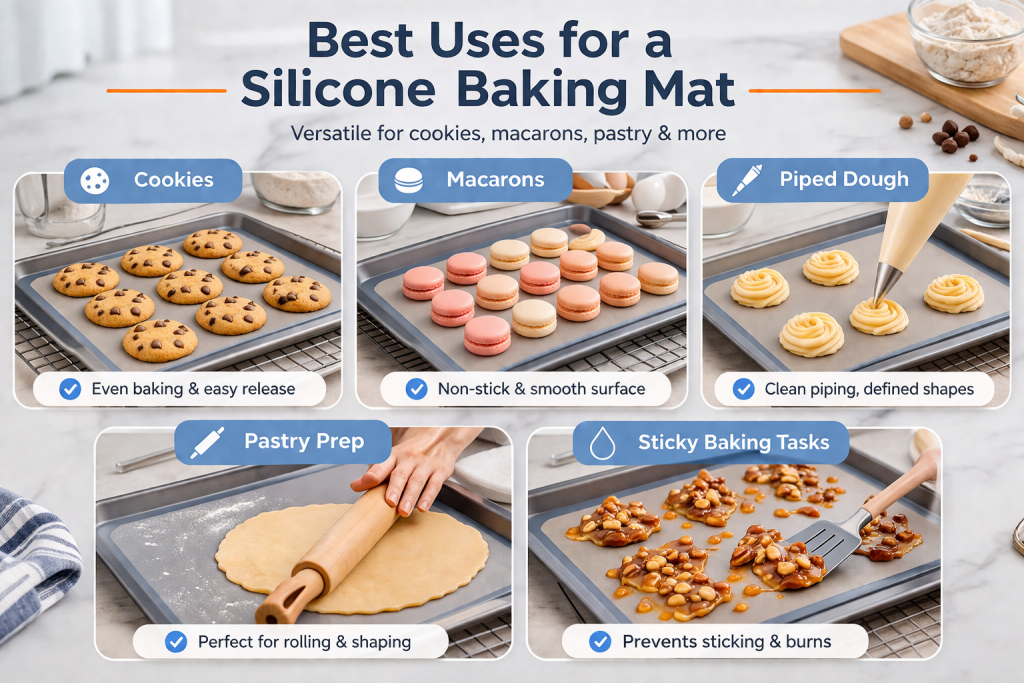
Table of Contents
- Quick answer
- Best uses for a silicone baking mat
- When it works better than parchment
- When it is a poor fit
- What foods benefit most
- Is it only for baking?
- What brands should explain
- FAQ
Quick answer
Use a silicone baking mat when you want a reusable non-stick surface for oven baking and easy release. It is especially useful for cookies, macarons, pastry work, and sticky or delicate baking jobs that benefit from a predictable surface.
Best uses for a silicone baking mat
The best uses usually have three things in common: repeated baking, sticky ingredients, and a need for easier release.
- cookies and biscuit-style dough
- macarons and piped batters
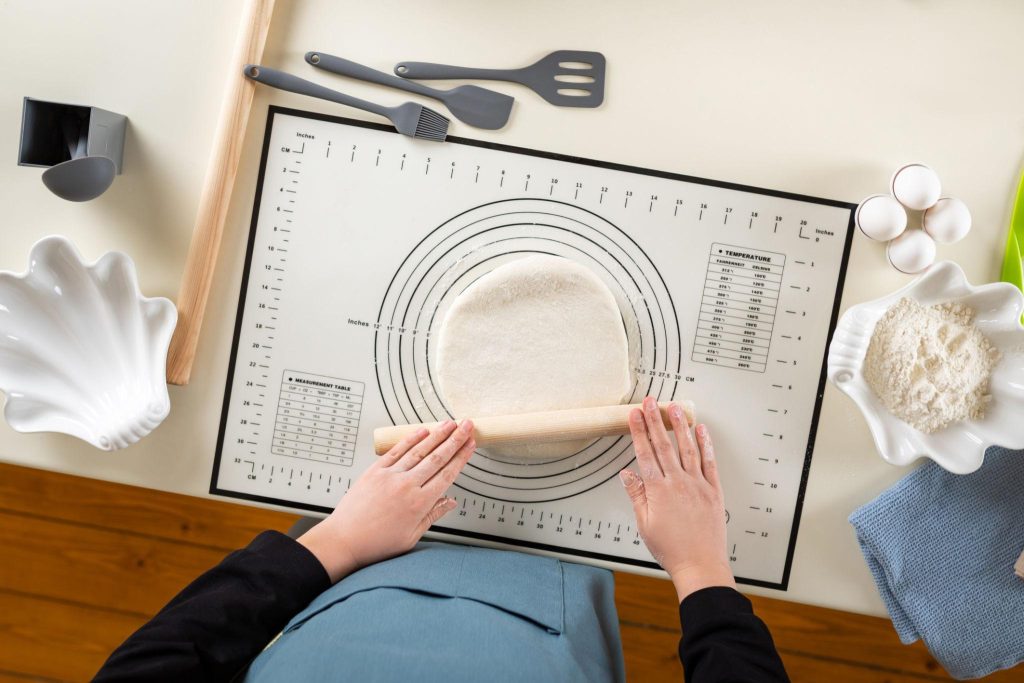
- pastry and laminated dough prep
- sticky sugar or caramel-adjacent baking tasks
- general oven prep where cleanup and reuse matter
If your main question is setup rather than application, our practical guide on how to use a silicone baking mat walks through tray placement, greasing, and first-use mistakes.
When it works better than parchment
A silicone baking mat works better than parchment when reuse is part of the value. It also helps when you want a stable non-stick surface that does not shift or wrinkle during setup.
- better for repeat use
- better for easy release in sticky jobs
- better for brands selling reusable kitchenware value
If you are weighing the tradeoff more directly, our article on silicone baking mat vs parchment paper compares browning, cleanup, and reuse side by side.
When it is a poor fit
A silicone baking mat is not the answer for everything.
- it is a poor fit for broilers and direct flame
- it is not ideal if you want disposable one-time cleanup
- it may not be your favorite choice for recipes where you prefer more bottom browning
- it should not be treated like a universal heat barrier
For oven limits and misuse boundaries, use this companion guide on silicone mat temperature limits before assuming the mat can handle every hot kitchen task.
What foods benefit most
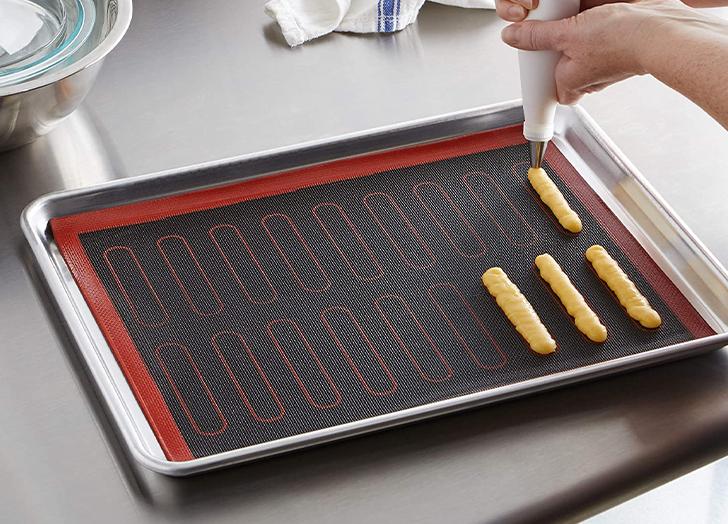
Foods that benefit most are usually the ones that stick easily or need a repeatable work surface:
- drop cookies
- macarons
- choux and piped dough
- croissant and pastry prep
- sticky baked snacks that are annoying on bare trays
That said, recipe behavior still matters. Some bakers prefer parchment for certain cookies because of the browning pattern. Others prefer silicone for its repeatability and release.
Is it only for baking?
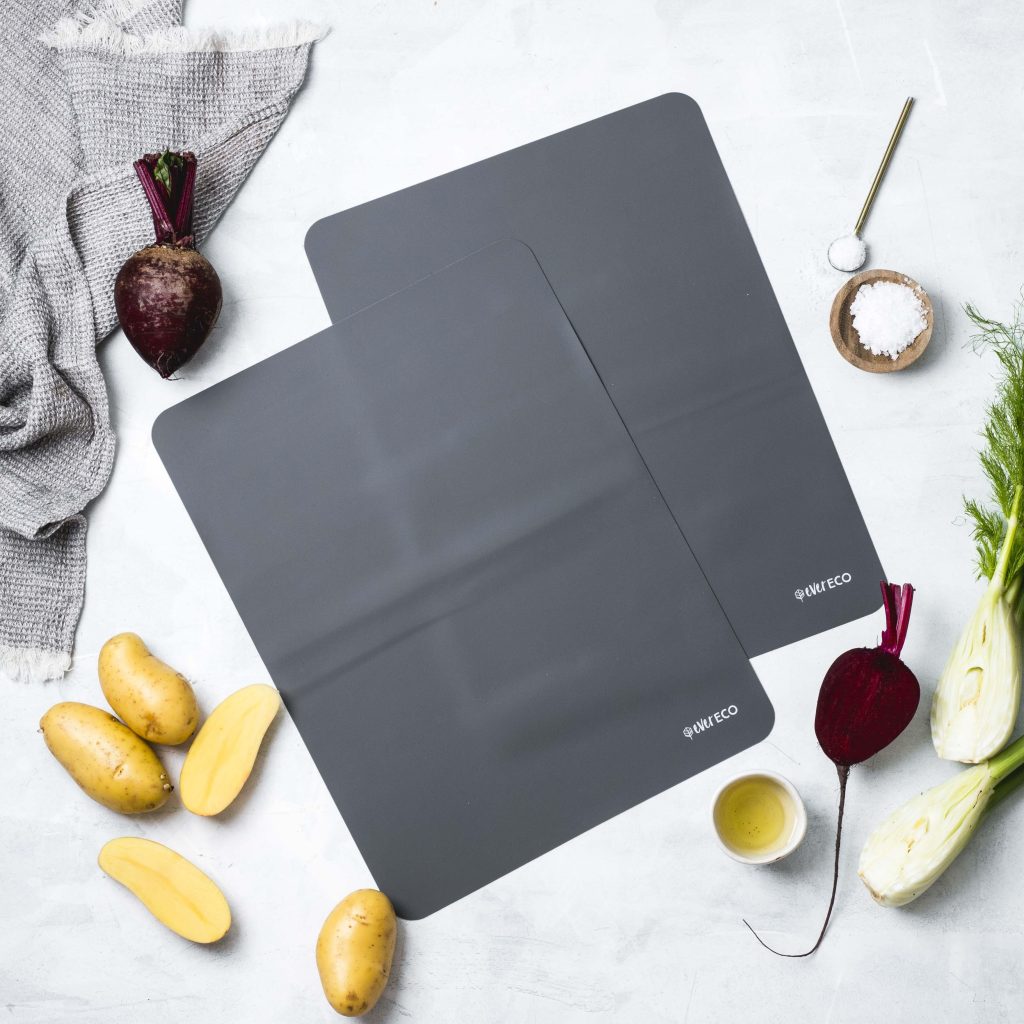
Mostly, yes, but not only. Many cooks also use these mats for dough handling, portioning, and cooling or freezing prep, as long as the product is being used within its intended range.
The bigger rule is not baking only. The bigger rule is use it only for conditions the product was designed to handle. That is also why broader food-contact understanding matters. If your product line relies on compliance-sensitive kitchenware, working with a food-contact silicone manufacturer helps align use claims with the product’s real material limits.
If your question is less about use cases and more about long-term care, our cleaning guide on how to clean silicone mats without grease buildup is the next article to read.
What brands should explain
Brands should not assume shoppers already know what a reusable baking mat is good for. Product pages and package inserts should explain:
- the best baking tasks for the mat
- what not to do with it
- how it compares with parchment paper
- how to clean and store it
- when it should be replaced
If you are sourcing silicone mats for resale or private label, a dependable custom silicone mat manufacturer should help you match the product design to the real use case instead of selling one generic mat as if it fits every kitchen problem.
The best answer to what a silicone baking mat is used for is not everything. It is the specific set of baking jobs where reuse, easy release, and repeatable setup actually matter.
FAQ
What is a silicone baking mat used for?
It is used as a reusable non-stick baking surface for cookies, pastry, sticky batters, and other oven-baking tasks where release and cleanup matter.
Are silicone baking mats only for cookies?
No. They are also useful for macarons, pastry work, piped dough, and other sticky or delicate baking jobs.
Can a silicone baking mat replace parchment paper?
Sometimes yes, but not always. Silicone mats are better for reuse. Parchment is often better for one-time cleanup or certain browning preferences.
Can you use a silicone baking mat under a broiler?
No. A silicone baking mat should not be treated as broiler safe or direct-flame safe unless the exact product explicitly says so.
Why would a brand sell a silicone baking mat instead of disposable liners?
Because the reusable value proposition is different. It supports repeat use, product branding, and a more durable kitchenware positioning.
Related Silicone Mat Topics
- How to Use a Silicone Baking Mat
- Silicone Baking Mat vs Parchment Paper
- How to Clean Silicone Mats
- Silicone Mat Temperature Limits
- Are Silicone Baking Mats Good for Cookies?