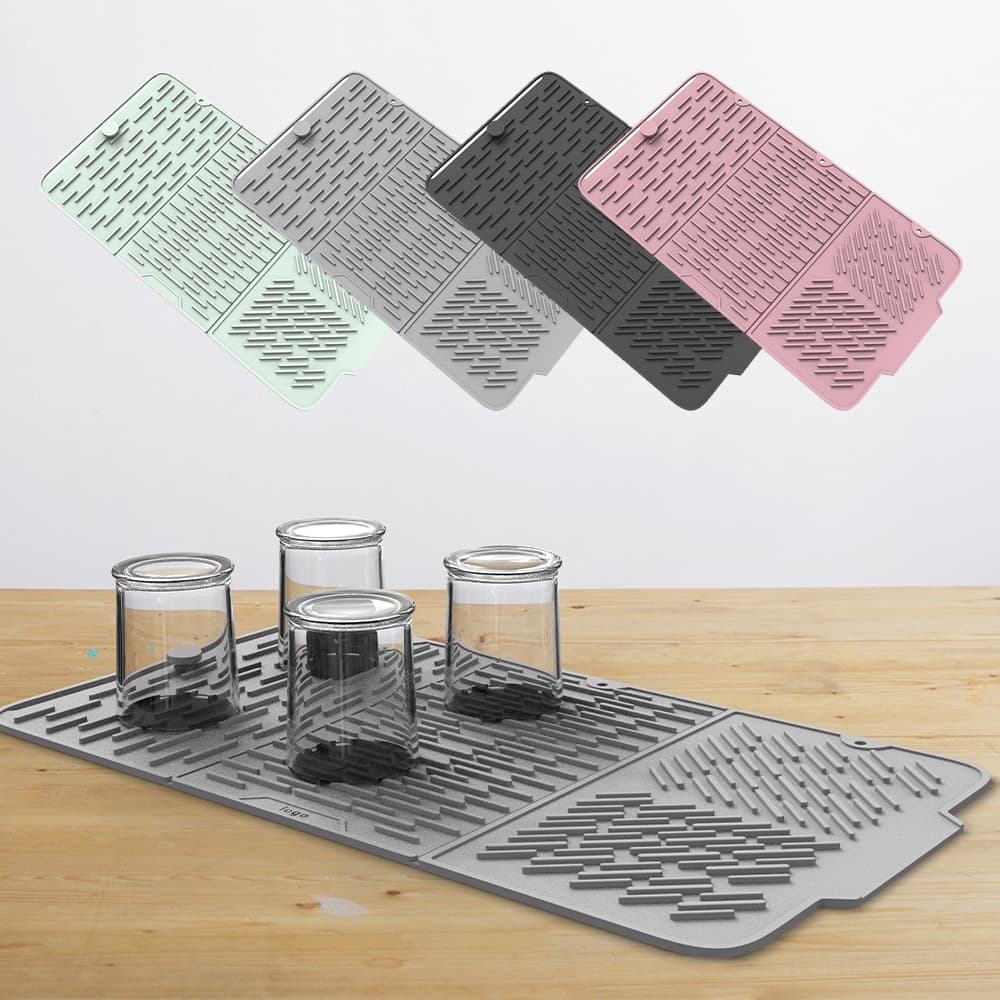
Short answer: A food grade silicone mat is not defined by a marketing badge alone. It should be made for intended food contact use, manufactured with a controlled material system, cured properly, and supported by the right documentation for the target market.
That is why the phrase food grade creates so much confusion. It sounds simple, but the real question is whether the exact finished product has been evaluated for the way it will actually be used.
For buyers screening a silicone mat manufacturer, this means asking for product-specific documents, not accepting a generic line in the quote that says only food grade silicone.
Table of Contents
- Direct answer
- Why food grade is not a shortcut
- What FDA usually means for silicone mats
- What LFGB usually means and why buyers ask
- Why odor, curing, and pigments matter
- What home cooks can check
- What buyers should request from suppliers
- FAQ
Direct answer
A food grade silicone mat should be suitable for repeated food contact under intended use conditions. In practice, that means the material system, additives, curing process, and finished-product performance all matter more than a badge or slogan.
Why food grade is not a shortcut
People often use the phrase food grade as if it automatically answers every safety question. It does not.
- it does not tell you the exact temperature limit
- it does not tell you how well the product was cured
- it does not tell you whether pigments or additives were controlled correctly
- it does not tell you whether the finished mat was evaluated for real use conditions
That is why this topic sits next to, but not inside, the broader question of whether silicone baking mats are safe in everyday use. Food-contact suitability is one part of the answer, not the whole answer.
What FDA usually means for silicone mats
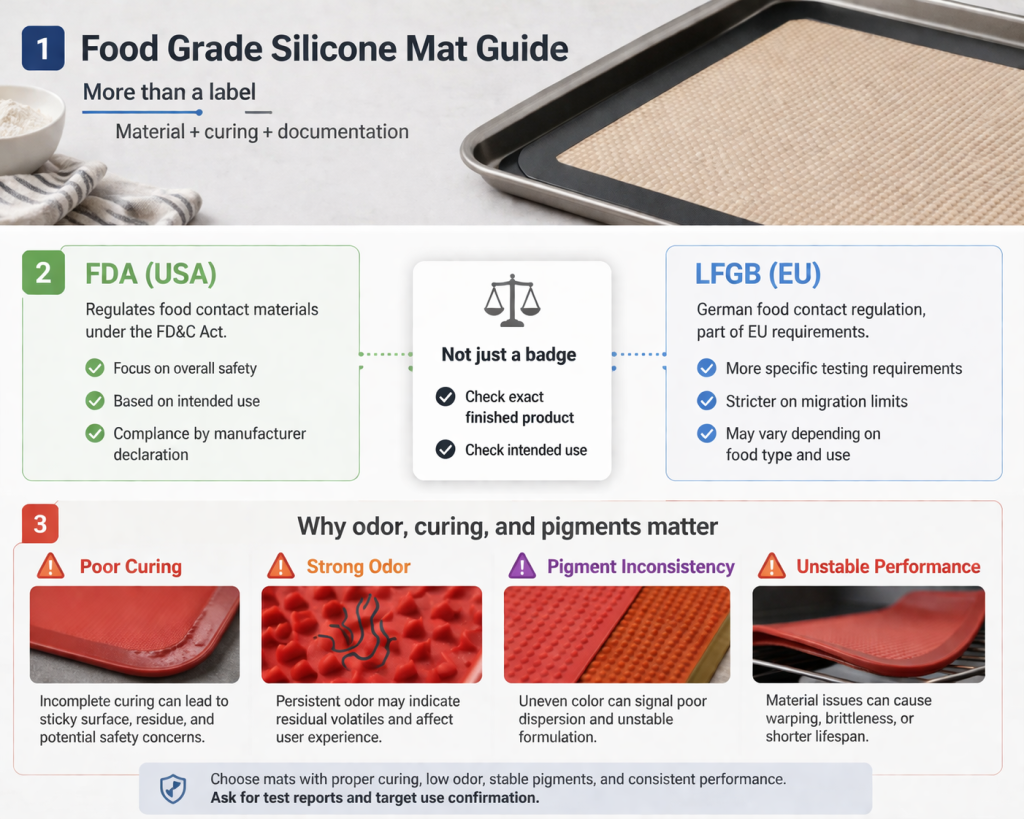
In buyer conversations, FDA usually comes up as shorthand for U.S. food-contact compliance expectations. The FDA explains that food contact substances are evaluated based on intended use, including migration and toxicological data relevant to that use.
That matters because a silicone mat is not just a raw material sample. It is a finished product used under repeated heat and food-contact conditions. If compliance is important to your program, it helps to work with a FDA silicone supplier that can explain how the finished product and the documentation line up.
What LFGB usually means and why buyers ask
LFGB comes up often in Europe-facing sourcing because buyers use it as a stricter food-contact quality signal. But it is important to be precise here: not every internet claim about LFGB means the whole finished product has been tested in the same way.
The German BfR explains that its recommendations on food contact materials refer to specific materials such as silicone and reflect conditions under which products can be manufactured so they are suitable for food contact. It also makes clear that manufacturers, not the BfR, are responsible for ensuring the finished article is appropriate for its intended use.
In plain language, that means buyers should ask exactly what was tested, under what use conditions, and whether the document applies to the finished silicone mat they are buying.
Why odor, curing, and pigments matter
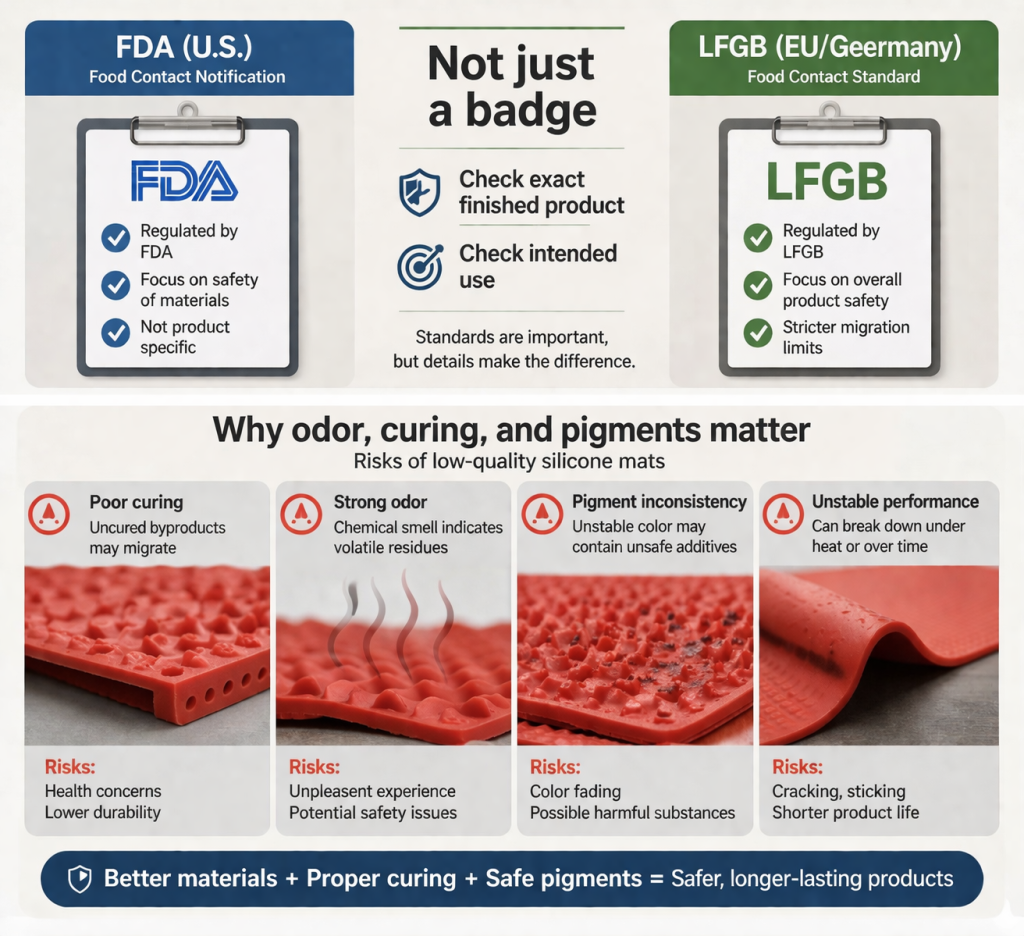
Material quality is not just a paperwork issue. It shows up in everyday use.
- poor curing can leave unstable performance or strong odor
- bad pigment control can affect consistency
- misleading food-grade claims can hide weak process control
- finished-product performance matters more than catalog language
If you are trying to separate normal silicone behavior from warning signs, our article on why buyers worry about silicone mat toxicity explains how odor, overheating, and breakdown fit into the picture.
What home cooks can check
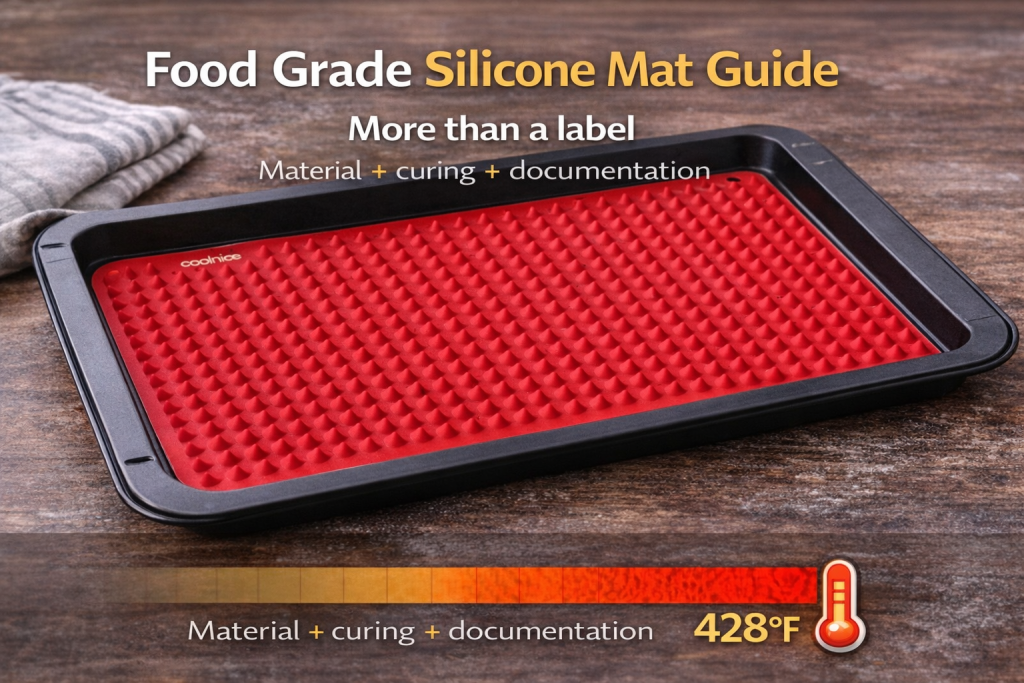
Most home bakers are not going to review lab reports, but they can still check for obvious quality signals:
- does the mat have a clear stated use and temperature range
- does it stay stable after repeated washing and heating
- does it avoid persistent strong odor in normal use
- does the brand explain care and replacement clearly
If a mat is already in use, our temperature guide on silicone mat heat limits and overheating signs is the better follow-up article for misuse and oven exposure.
What buyers should request from suppliers
For sourcing teams, the right questions are very practical:
- does the document apply to the exact finished product or only the base material
- what market is the documentation intended to support
- what temperature and food-contact conditions were considered
- how are curing consistency, pigments, and additives controlled
- what use and care instructions should go on the package
If you are sourcing silicone mats for resale or private label, a capable custom silicone mat manufacturer should be able to connect the material declaration, compliance paperwork, use limits, and packaging claims into one coherent product story.
A food grade silicone mat is not just a material claim. It is a finished-product claim backed by intended use, process control, and documentation that actually matches the product being sold.
FAQ
What makes a silicone mat food grade?
It should be made for intended food contact use, manufactured with controlled materials and curing, and supported by documentation appropriate for the target market and use conditions.
Does food grade mean a silicone mat is automatically safe?
No. Food-contact suitability matters, but so do temperature limits, correct use, and product condition over time.
What does FDA mean for silicone mats?
In U.S. buyer language, it usually refers to food-contact compliance expectations tied to intended use and supporting data for that use.
What does LFGB mean for silicone products?
Buyers often use it as a stricter food-contact benchmark for Europe-facing programs, but they still need to check exactly what was tested and whether the document applies to the finished product.
Can a food grade silicone mat still smell bad?
A new product may have a light temporary smell, but persistent strong odor after normal cleaning and use can point to poor curing, misuse, or product-quality issues that deserve a closer look.
Related Silicone Mat Topics
- Are Silicone Mats Safe?
- Are Silicone Baking Mats Toxic?
- Silicone Mat Temperature Limits
- Are Silicone Mats Dishwasher Safe?