Short answer: If you are sourcing for private label, the right custom silicone mat manufacturer is not just the factory with the fastest quote. It is the supplier that can match your use case, explain material and compliance clearly, control tooling and sampling, and keep the project stable after the first sample.
That is why buyers often get stuck. A supplier may look strong in photos but still be vague on curing, packaging, MOQ logic, or application-specific design details. For silicone mat projects, those quiet details are where delays and complaints usually start.
If you are still at the shortlist stage, use this guide as a screening framework before committing to one silicone mat manufacturer.
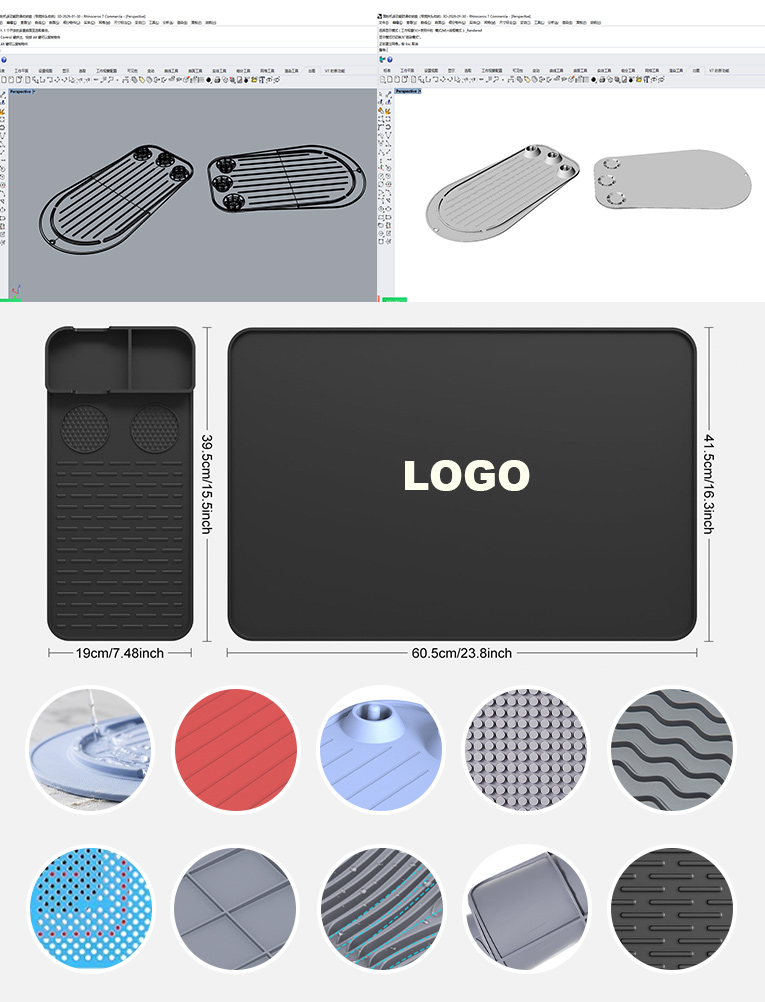
Table of Contents
- What you are really sourcing
- How to screen a manufacturer fast
- Questions to ask before sampling
- What good sample communication looks like
- Red flags during quotation
- How to compare suppliers without getting lost
- FAQ
What you are really sourcing
Buyers sometimes think they are sourcing only a silicone mat. In practice, they are sourcing a whole delivery system:
- product design understanding
- material and compliance fit
- tooling and sample execution
- logo and packaging support
- production consistency
- communication quality after the PO is placed
That is why the material side should not be an afterthought. If the project involves kitchen or food-contact positioning, it helps to understand what a food grade silicone manufacturer should be able to explain before you move too far into cost discussions.
How to screen a manufacturer fast
A fast first-pass screen usually comes down to seven checks:
- Can they explain what kind of silicone mat projects they already handle?
- Can they discuss dimensions, thickness, texture, logo method, and packaging without guessing?
- Do they understand the intended application, not just the drawing?
- Can they explain compliance and material options clearly?
- Do they give realistic sampling and production timing?
- Are they clear about MOQ, tooling, and revision logic?
- Do they answer in a way that reduces risk instead of just chasing the order?
If the supplier cannot answer those basics cleanly, the project usually gets harder after sampling, not easier.
If your project also depends on performance boundaries such as oven use or heat exposure, our article on silicone mat temperature limits and overheating risk is a useful companion before you compare quotations.
Questions to ask before sampling
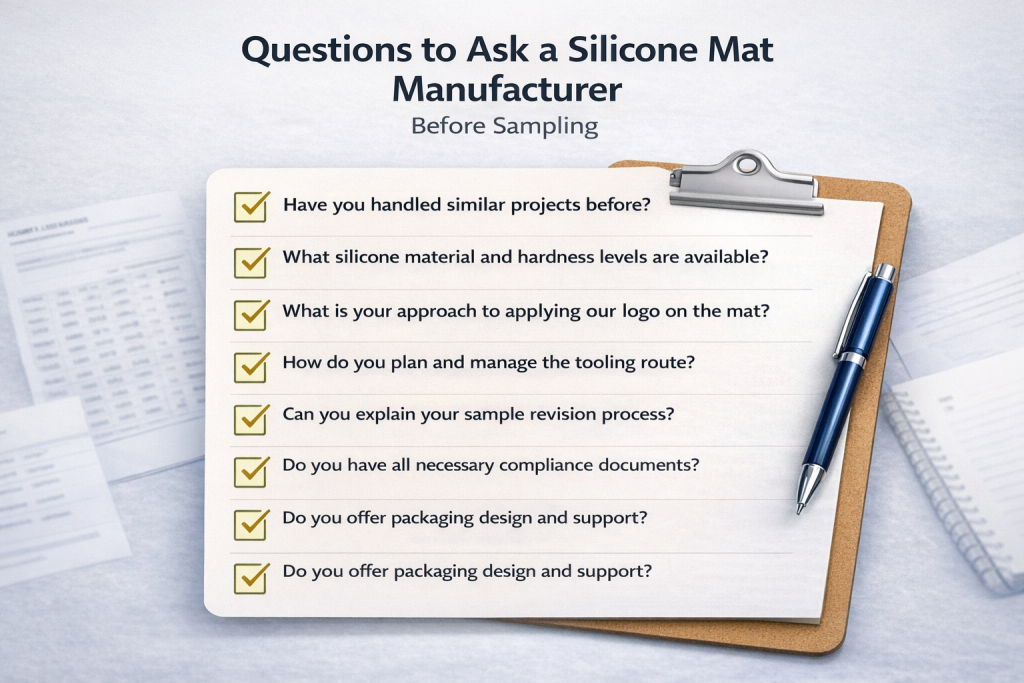
Before sampling starts, ask for specifics instead of broad promises:
- What similar mat structures have you made before?
- What material hardness range fits this use case?
- How will logo, texture, drainage, or measurement markings be made?
- What is the expected tooling route for this design?
- What is included in the sample round and what counts as a revision?
- What compliance documents can support this intended market?
- How will packaging and barcode requirements be handled?
If you are also trying to judge whether the finished article can support your food-contact claim, keep our guide on what makes a silicone mat food grade nearby. It helps separate document language from real product-readiness.
What good sample communication looks like
Strong suppliers usually make sample communication easier, not noisier. Good sample communication should include:
- clear drawing confirmation
- dimension tolerances
- material recommendation with reasoning
- logo and surface-detail confirmation
- sample photo or video updates when useful
- revision notes that are easy to track
If communication turns vague as soon as technical details appear, that is usually a preview of what production follow-up will feel like later.
Red flags during quotation
Quotation-stage red flags are often more valuable than a low initial price.
- They use generic wording for every silicone product category.
- They avoid discussing use-case-specific risks.
- They cannot explain sample revision logic.
- They promise impossible lead times without detail.
- They talk about compliance in slogans only.
- They do not ask enough questions about dimensions, use, or branding.
Those are the kinds of signals that make a supplier look easy at RFQ stage and painful after deposit stage.
How to compare suppliers without getting lost
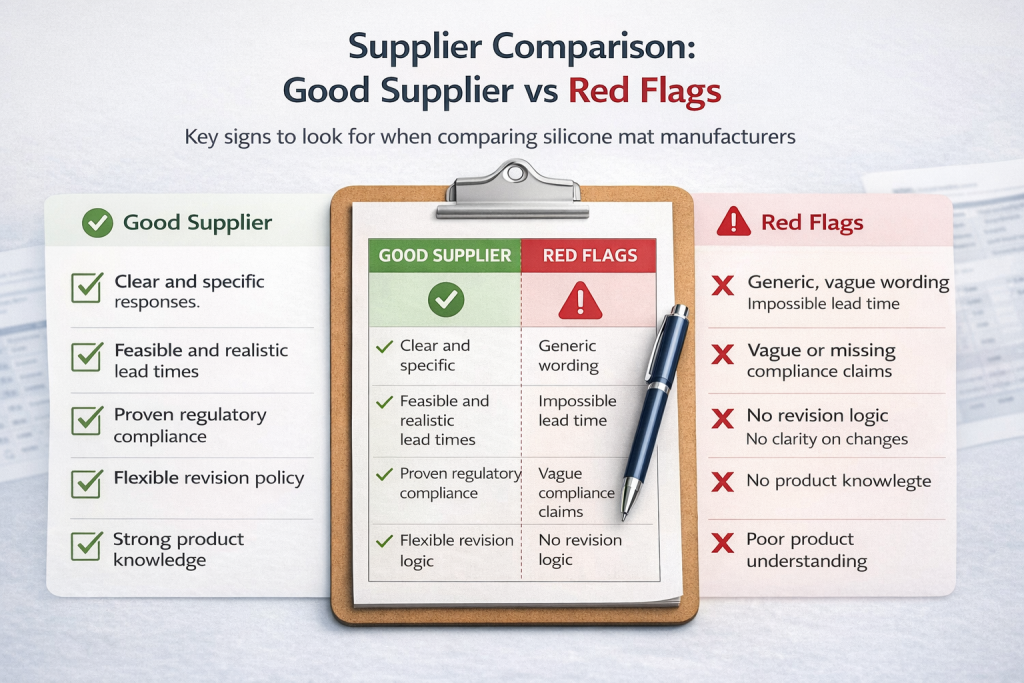
The easiest way to compare suppliers is not by email tone alone. Build a short comparison sheet with the same columns for each candidate:
- product understanding
- sampling clarity
- tooling logic
- material / compliance confidence
- packaging support
- MOQ logic
- lead time realism
- communication quality
If you are sourcing silicone mats for resale or private label, a capable custom silicone mat manufacturer should help you make decisions faster by clarifying tradeoffs, not by burying you in vague reassurance.
Once you have narrowed the shortlist, the next article to read is MOQ, tooling, sampling, and lead time for custom silicone mat projects, because that is where many otherwise good projects start slipping.
The best custom silicone mat manufacturer is not the one that says yes the fastest. It is the one that reduces uncertainty at every project stage.
FAQ
How do I choose a custom silicone mat manufacturer?
Choose one that understands your use case, communicates clearly on tooling and sampling, explains material and compliance well, and gives realistic rather than overly easy promises.
What should I ask a silicone mat manufacturer before sampling?
Ask about similar projects, material options, tooling route, sample revision logic, compliance support, packaging handling, and expected timing.
Is the cheapest silicone mat supplier usually the best option?
Not usually. A low quote can hide weak sampling logic, vague communication, or unstable production follow-through.
What is the biggest sourcing mistake in silicone mat projects?
Assuming the project is simple and failing to compare suppliers on technical clarity, not just price and response speed.
Should I compare several manufacturers at once?
Yes. A side-by-side comparison makes it much easier to spot who actually understands the project and who is just quoting generically.