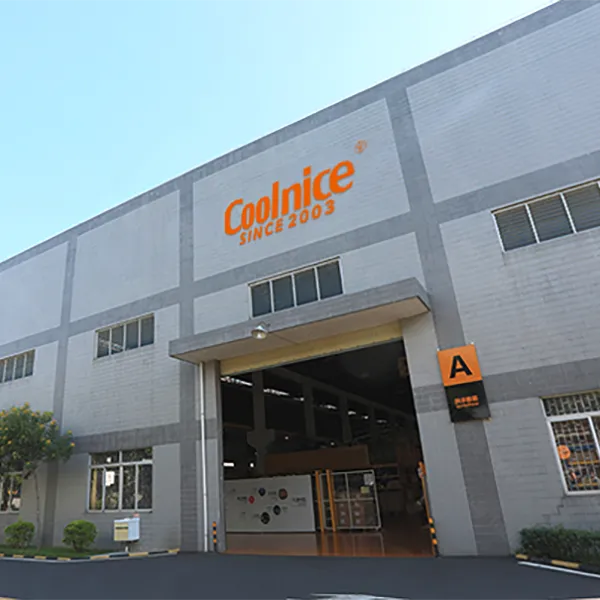
OEM KitchenAid Accessories Manufacturer in China: A B2B Sourcing Guide
If you are looking for an OEM KitchenAid accessories manufacturer in China, you are probably not just searching for a single product. You are looking for a reliable supply partner who can help you build a sellable accessory line for Amazon, Shopify, TikTok Shop, retail bundles, or wholesale distribution. The right factory should understand food grade silicone, practical stand mixer use cases, packaging requirements, quality inspection, and the timing pressure around the Q4 baking season.
This guide is written for B2B buyers, private label brands, sourcing managers, Amazon sellers, and kitchenware distributors who want to develop compatible stand mixer accessories such as silicone flour funnels, splash guards, stand mixer mats, attachment holders, and storage solutions. It explains what to check before placing an order, how OEM/ODM customization usually works, and how to reduce risk when sourcing factory direct supply from China.
KitchenAid is a trademark of its respective owner. We are not affiliated with or endorsed by KitchenAid. All products discussed here are compatible accessories intended for independent aftermarket sales.
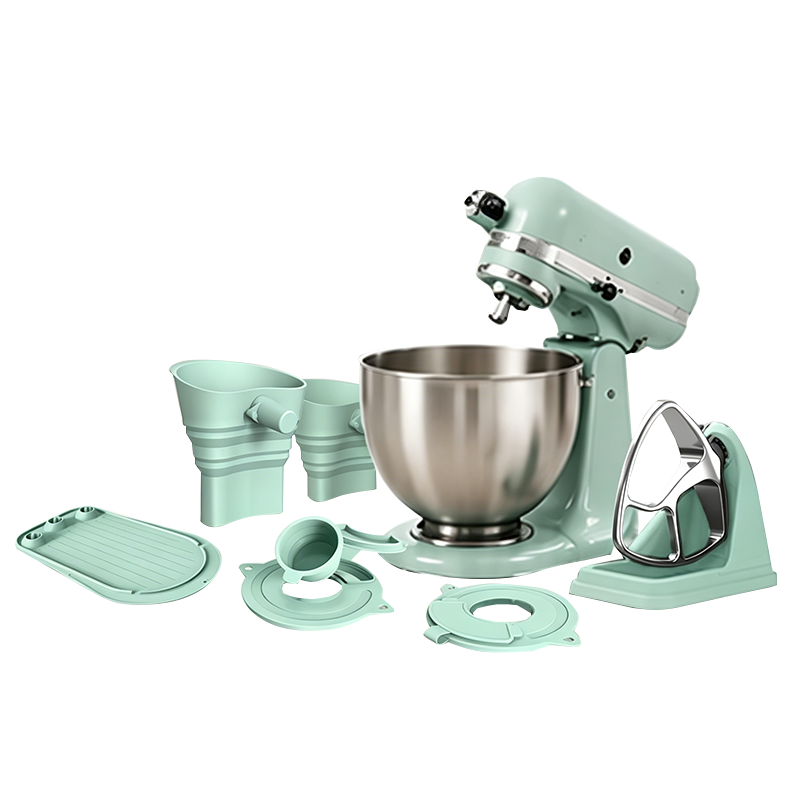
For a broader view of available product types, you can also visit the custom stand mixer accessories. If you already know your target market and need factory support, you can review our About / Factory page or send an inquiry through the Contact / Inquiry page.
Table of Contents
- Why Source Compatible Stand Mixer Accessories from China?
- What Products Can an OEM Manufacturer Supply?
- How to Evaluate an OEM KitchenAid Accessories Manufacturer in China
- Materials, Food Grade Silicone, and Compliance Basics
- OEM/ODM Customization Options for Private Label Brands
- MOQ, Cost Structure, and Lead Time Planning
- Quality Inspection Checklist Before Shipment
- Product Strategy for Amazon, Shopify, TikTok, and Wholesale
- FAQ
- Start Your OEM Accessory Project
Why Source Compatible Stand Mixer Accessories from China?
China remains one of the most practical sourcing bases for kitchen accessory brands because it combines silicone molding, LSR injection molding capability, packaging, assembly, and export experience in one supply chain. For compatible stand mixer accessories, this matters because one finished product may require more than a single process. A flour funnel might need soft silicone, stable shaping, printed packaging, barcode labeling, and carton protection. A stand mixer mat might need material testing, anti-slip performance, color matching, and size consistency. A complete bundle may require several accessories packed together in a retail-ready box.
For B2B buyers, the advantage is not only unit price. The larger value is development speed. A factory that already understands stand mixer accessory use cases can help you move from concept to sample more efficiently. Instead of explaining every detail from the beginning, you can discuss target mixer models, preferred colors, packaging format, and sales channel requirements.
Factory direct supply also gives buyers more control over private label details. You can request custom logo placement, custom packaging, color variations, bundle sets, instruction cards, and carton marks. This is especially useful for Amazon and Shopify sellers who need clear product differentiation without creating a completely new appliance category.
Typical B2B buyer goals
- Develop a private label accessory line with consistent branding.
- Improve profit margins by sourcing factory direct instead of through trading layers.
- Prepare inventory before the Q4 baking season, holiday gifting period, or seasonal promotion campaigns.
- Create bundles that increase average order value for Amazon, Shopify, TikTok Shop, and wholesale channels.
- Test low MOQ orders before scaling to larger purchase volumes.
If you are building a full product line rather than a single SKU, it is worth reading our guide on KitchenAid accessories bundle ideas and our article on kitchen accessories with high profit margins for Amazon sellers. These topics connect directly with sourcing strategy because the best factory choice depends on the products you plan to sell together.
What Products Can an OEM Manufacturer Supply?
A focused OEM manufacturer should be able to support several compatible stand mixer accessory categories. The exact product range may vary, but buyers often start with practical items that solve common baking or storage problems. These accessories are easy to explain in product listings and short-form videos, which makes them suitable for Amazon, Shopify, and TikTok sellers.
| Product Type | Main Buyer Use Case | Customization Potential | Related Page |
|---|---|---|---|
| Silicone flour funnel | Helps guide flour or dry ingredients into the mixer bowl with less mess. | Color, logo, packaging, bundle card, instruction insert. | Silicone Flour Funnel |
| Stand mixer splash guard | Reduces splashing when mixing wet or powdery ingredients. | Material, rim design, retail box, private label artwork. | Stand Mixer Splash Guard |
| Stand mixer mat | Protects countertops and helps users move heavy mixers more easily. | Size, thickness, color, surface texture, custom packaging. | Stand Mixer Mat |
| Attachment holder | Organizes paddles, hooks, beaters, and small mixer tools. | Layout, logo, mounting format, box design, bundle pairing. | Attachment Holder |
When selecting products, avoid thinking only about what looks attractive in a catalog. A good accessory should be easy to demonstrate, easy to photograph, simple to explain, and suitable for repeatable quality inspection. For example, a flour funnel has a clear use case for preventing powder from spreading across the countertop. A mat helps with movement and surface protection. An attachment holder solves storage problems for buyers with multiple tools.
To understand which accessories may fit current marketplace demand, see our related article on top selling KitchenAid accessories on Amazon. For a more buyer-facing product selection view, you can also review best KitchenAid accessories 2026.
How to Evaluate an OEM KitchenAid Accessories Manufacturer in China
Choosing an OEM KitchenAid accessories manufacturer in China should be treated as a supply chain decision, not only a price comparison. A low quotation can become expensive if samples are inconsistent, packaging arrives damaged, silicone has odor issues, or shipments miss the selling season. The goal is to find a supplier that can support product development, mass production, inspection, and communication with reasonable stability.
Factory capability
Ask whether the supplier is a direct factory, trading company, or factory with an export office. A direct factory may offer better control over tooling, molding, inspection, and production scheduling. A trading company may be useful in some categories, but for private label kitchen accessories, direct production communication often reduces misunderstanding.
Product experience
Compatible stand mixer accessories require practical knowledge of bowl sizes, user habits, packaging constraints, and common complaints. A supplier with relevant experience can usually identify small improvements early, such as a more stable rim, better silicone flexibility, stronger carton packing, or a clearer instruction card.
Communication quality
Good communication is a real sourcing asset. A capable supplier should answer questions clearly, confirm specifications in writing, provide sample photos or videos, and document changes before mass production. If a supplier cannot confirm basic material, size, color, packaging, and lead time details during sampling, larger orders may become difficult to manage.
Inspection process
Ask how the factory checks incoming material, production dimensions, logo printing, packaging, carton labeling, and final random inspection. For kitchen accessories, quality inspection should include both appearance and functional checks. A flour funnel should fit its intended use. A splash guard should sit properly. A mat should not curl badly or slide too easily.
A useful supplier is not simply the one with the lowest unit price. It is the one that helps you reduce uncertainty before you commit to inventory.
Materials, Food Grade Silicone, and Compliance Basics
Food grade silicone is a common material for stand mixer accessories because it is flexible, washable, and suitable for products that may contact dry ingredients or kitchen surfaces. However, buyers should not rely on a phrase in a quotation alone. Ask for material information, applicable test reports when available, and production sample confirmation before final approval.
For private label and wholesale buyers, material consistency is important because customer reviews often mention smell, flexibility, staining, and fit. A product that looks acceptable in photos may still create problems if the silicone feels too thin, too stiff, or has an unpleasant odor. This is why pre-production samples and retained samples are useful. They give both buyer and factory a physical reference for future inspection.
What to confirm before bulk production
- Material type and whether food contact requirements apply to the product.
- Color standard, preferably with a physical color sample or Pantone reference.
- Product dimensions and tolerance range.
- Surface finish, flexibility, and edge quality.
- Logo method, position, size, and durability expectations.
- Packaging material, insert card, barcode, warning text, and carton marks.
- Any marketplace-specific requirements for Amazon FBA or retail distribution.
For buyers selling in regulated markets, compliance responsibilities should be discussed early. Requirements can vary by destination, product function, material contact level, and sales channel. A responsible factory can help provide available documents and arrange testing support, but the importer or brand owner should confirm the final requirements for the target market.
OEM/ODM Customization Options for Private Label Brands
OEM and ODM customization are two different routes. OEM usually means you provide brand requirements, packaging artwork, logo details, and sometimes product specifications based on an existing factory item. ODM usually involves deeper development, such as adjusting structure, size, material thickness, or creating a new accessory concept. For most Amazon, Shopify, TikTok, and wholesale sellers, the best starting point is often OEM customization with selective improvements.
Common customization options include custom logo, custom packaging, private label instruction inserts, color matching, barcode labels, carton marks, and bundle configuration. For example, a buyer might order a silicone flour funnel in two colors, pair it with a stand mixer mat, and sell the set as a baking prep bundle. Another buyer might combine a splash guard and attachment holder for customers who want cleaner mixing and better storage.
Customization comparison
| Customization Level | Best For | Typical Requirements | Risk Level |
|---|---|---|---|
| Logo and label | Fast private label launch | Logo file, label size, barcode, packaging confirmation. | Low |
| Custom packaging | Amazon, Shopify, gift sets, retail shelves | Artwork, dieline, material choice, proof approval. | Low to medium |
| Color and bundle mix | Brand differentiation and seasonal campaigns | Color reference, MOQ by color, bundle packing instructions. | Medium |
| Structural adjustment | ODM improvement or exclusive product angle | Drawing, sample review, tooling discussion, test fitting. | Medium to high |
Buyers preparing Q4 baking season campaigns should begin customization discussions early. Packaging approval, sample shipping, revision rounds, mass production, inspection, and international freight all take time. Even a simple custom box can delay launch if barcode placement, instruction text, or carton packing is not confirmed in advance.
If your goal is to create higher-value sets, review must-have KitchenAid mixer accessories and splash guard vs flour funnel. These guides help clarify which accessories are easier to position together in a bundle.
MOQ, Cost Structure, and Lead Time Planning
Low MOQ can be helpful for new sellers, but it should be understood correctly. A factory may support low MOQ for standard colors, existing molds, and simple packaging. MOQ usually increases when buyers request custom colors, printed boxes, logo tooling, mixed bundles, or unique material specifications. The more customized the order, the more preparation the factory needs before production becomes efficient.
Cost is also more than the quoted unit price. B2B buyers should calculate product cost, packaging cost, inner carton and master carton cost, inspection cost, freight, duties, marketplace fees, and expected return or replacement allowance. A product with a slightly higher factory price may still be better if it has stronger packaging, fewer defects, and better customer review potential.
Planning checklist for first orders
- Confirm whether the product uses an existing mold or requires tooling.
- Request standard color and custom color MOQ separately.
- Ask whether custom logo or custom packaging changes the MOQ.
- Confirm sample cost, sample lead time, and revision process.
- Agree on production lead time after deposit and artwork approval.
- Plan extra time for quality inspection and shipment booking.
- Work backward from your Amazon FBA, Shopify launch, TikTok promotion, or wholesale delivery deadline.
For Q4 baking season, timeline discipline matters. Many buyers place kitchenware orders late, then discover that sample revisions, packaging printing, and freight space are tighter than expected. If you want products available for holiday baking, gift sets, or seasonal promotions, start supplier communication and sample checks well before the peak production period.
Quality Inspection Checklist Before Shipment
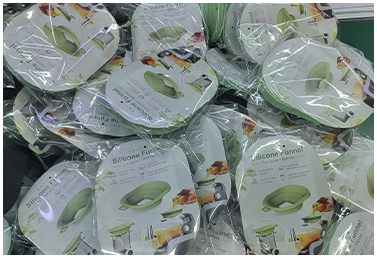
Quality inspection protects both buyer and supplier because it creates a clear standard before goods leave the factory. For compatible stand mixer accessories, inspection should combine visual, dimensional, functional, and packaging checks. The exact checklist depends on the product, but the following areas are commonly useful.
- Appearance: Check color consistency, stains, scratches, flashing, deformation, dust, and surface defects.
- Dimensions: Measure key sizes against the approved sample or specification sheet.
- Function: Confirm the accessory performs its intended use, such as guiding flour, reducing splash, holding attachments, or protecting countertops.
- Material feel: Compare flexibility, thickness, odor, and finish with the approved sample.
- Logo and printing: Check logo position, color, adhesion, clarity, and alignment.
- Packaging: Confirm barcode, insert card, box artwork, polybag, carton quantity, and carton marks.
- Random sampling: Use an agreed inspection level or practical random check method based on order size.
For Amazon sellers, packaging errors can be as damaging as product defects. Incorrect barcode labels, weak cartons, missing inserts, or inconsistent bundle packing can create receiving problems and customer complaints. For wholesale buyers, carton marks and pack quantities should match the purchase order to avoid warehouse confusion.
It is also wise to keep golden samples. A golden sample is the approved reference product and packaging set. The buyer keeps one, and the factory keeps one. During production and future repeat orders, both sides can compare new goods against the same physical standard.
Product Strategy for Amazon, Shopify, TikTok, and Wholesale
Different sales channels need different sourcing decisions. Amazon sellers often focus on search demand, image clarity, review quality, FBA packing, and a competitive landed cost. Shopify sellers may care more about brand story, bundle design, email marketing, and repeat customer offers. TikTok sellers need products that can be demonstrated quickly in short videos. Wholesale distributors need stable cartons, repeatable supply, and product lines that retailers can understand at a glance.
Amazon sellers
For Amazon, accessories should solve a clear problem and photograph well. A silicone flour funnel can show the before-and-after difference of adding flour more neatly. A stand mixer mat can show counter protection and easier movement. A splash guard can show mixing control. Product listings should avoid exaggerated claims and focus on compatibility, material, package contents, and practical use.
Shopify brands
For Shopify, private label packaging and bundle storytelling are more important. You can group accessories around a theme such as cleaner baking prep, countertop protection, or storage organization. Custom packaging, custom logo, and brand color consistency help make the product feel like part of a real kitchenware line rather than a single imported item.
TikTok sellers
TikTok-friendly accessories should be visual within seconds. Flour flying everywhere, messy batter splash, and cluttered attachments are easy problems to demonstrate. If your product strategy includes TikTok Shop or creator content, choose accessories that show the problem and solution clearly on camera.
Wholesale and distribution
Wholesale buyers need stable supply and clear product differentiation. A factory direct supply model can support repeat orders, seasonal colors, private label packaging, and mixed carton planning. If you serve retailers, prepare product sheets with dimensions, material notes, package size, carton quantity, and basic care instructions.
For more practical selling angles, see how to prevent flour from flying everywhere, how to organize KitchenAid attachments, and best storage solutions for KitchenAid accessories.
Recommended Sourcing Workflow
A structured workflow makes OEM sourcing easier to control. Start with product selection, then confirm customization, sample approval, purchase order details, production inspection, and shipping documents. Many sourcing problems happen because buyers skip written confirmation during the early stages. A simple specification sheet can prevent avoidable errors.
- Define target products: Choose one hero SKU and one or two supporting products for a bundle or collection.
- Confirm sales channel: Amazon FBA, Shopify, TikTok Shop, wholesale, retail, or mixed channels.
- Request quotation: Ask for price by quantity, MOQ, packaging options, sample cost, and lead time.
- Approve samples: Check product fit, material, color, logo, packaging, and user experience.
- Finalize artwork: Confirm custom logo, custom packaging, instruction card, barcode, and carton marks.
- Place purchase order: Include all specifications, quantity, payment terms, inspection plan, and delivery requirements.
- Inspect production: Review production photos, pre-shipment samples, or third-party inspection when needed.
- Ship and review: Track freight, review customer feedback, and prepare improvements for repeat orders.
This workflow is especially important if you plan to scale from a low MOQ trial order to a larger seasonal order. Treat the first order as a learning stage. Use it to validate packaging, customer response, listing images, product videos, and review themes before expanding into more colors or bundle versions.
FAQ
Can I source private label compatible KitchenAid accessories from China?
Yes. Many B2B buyers source compatible stand mixer accessories from China with private label packaging, custom logo, custom colors, and bundle options. You should confirm product compatibility, material details, packaging requirements, and quality inspection standards before mass production.
What is the usual MOQ for OEM kitchen accessories?
MOQ depends on the product, material, color, logo method, and packaging. Low MOQ may be available for standard products and simple packaging, while custom colors, printed boxes, or ODM changes usually require higher quantities.
Can a factory help with Amazon FBA packaging?
A capable factory can usually support barcode labeling, carton marks, bundle packing, and product packaging suitable for Amazon FBA preparation. The buyer should provide the exact marketplace requirements and approve packaging samples before production.
What products are good for a first accessory bundle?
Common starting bundles include a silicone flour funnel with a splash guard, or a stand mixer mat with an attachment holder. These combinations are easy to explain and can support cleaner baking, countertop protection, or better organization.
Do you claim official affiliation with KitchenAid?
No. KitchenAid is a trademark of its respective owner. We are not affiliated with or endorsed by KitchenAid. The accessories discussed here are compatible aftermarket products for independent brands and sellers.
How early should I prepare for the Q4 baking season?
Start as early as possible because sampling, packaging design, production, inspection, and freight can take longer during peak periods. Buyers planning holiday bundles or seasonal promotions should build extra time into the sourcing schedule.
Start Your OEM Accessory Project
Building a profitable compatible stand mixer accessory line requires more than choosing a product from a catalog. You need the right combination of practical product design, food grade silicone knowledge, private label packaging, low MOQ flexibility, reliable quality inspection, and factory direct supply. A supplier that understands B2B requirements can help you move from sample to repeat order with fewer surprises.
If you are sourcing for Amazon, Shopify, TikTok Shop, wholesale, or seasonal Q4 baking promotions, start with a focused product plan. Choose your first hero accessory, decide whether you need custom logo or custom packaging, and confirm whether a bundle strategy makes sense for your market.
Explore the full OEM stand mixer accessory line, review our factory background, or send your product requirements through the Contact / Inquiry page. We can discuss OEM/ODM options, private label packaging, low MOQ trial orders, and wholesale supply for your next compatible stand mixer accessory project.